10 Tips for Choosing the Right Home Elevator for Your Needs?

Time:2026-04-02 Author:Oliver
0%

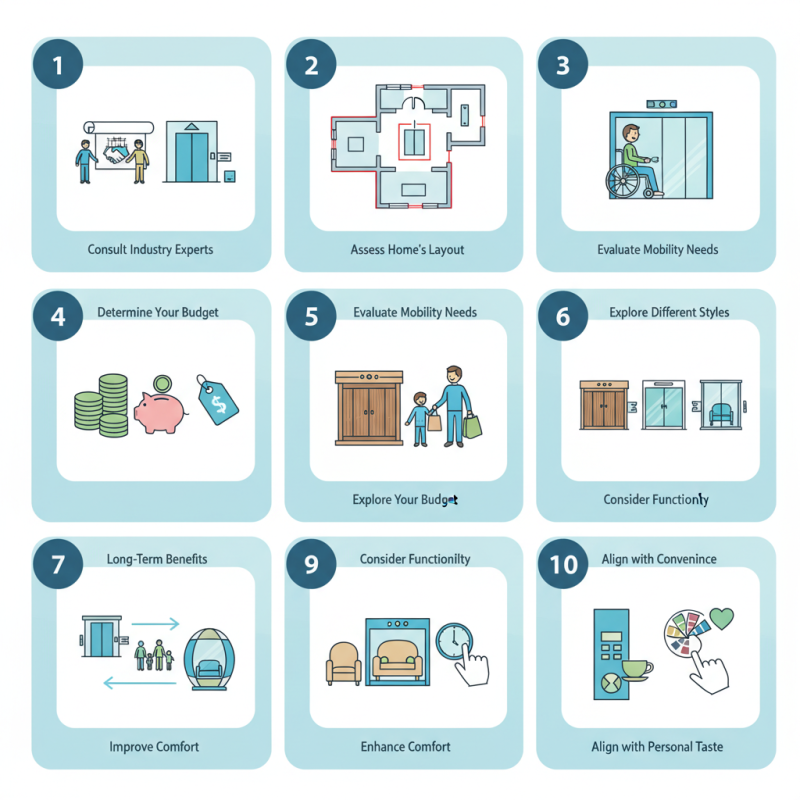
When considering how to choose the right elevator for a home, it's vital to consult industry experts. Jane Smith, a renowned elevator consultant, emphasizes, "Home elevators should seamlessly fit your lifestyle and space." This advice underscores the importance of personalization in the selection process.

Choosing the right home elevator involves assessing various factors. These include your home's layout, mobility needs, and budget. Home elevators come in different styles and functionalities. They may suit specific needs, from accessibility to aesthetic preferences. Take time to evaluate your options carefully.

Selecting an elevator is not just about installation. It's also about the overall impact on your daily life. Consider the long-term benefits of mobility solutions that cater to your family's changing needs. Reflect on how easy access can enhance comfort and convenience. The decision should align with both practicality and personal taste.
10 Tips for Choosing the Right Home Elevator for Your Needs?

Understanding Your Specific Needs for a Home Elevator

Choosing the right home elevator requires a clear understanding of your specific needs. Begin by assessing your space. Is there enough room for both the elevator and the surrounding fixtures? You’ll want to consider the design, as you don’t want it to clash with your home’s aesthetic. Height and weight capacity are also vital factors. A larger family may need a more robust elevator.

Next, think about mobility requirements. If you have elderly family members or individuals with disabilities, a spacious cabin is crucial. Features like automatic doors and low thresholds can enhance accessibility. Lighting inside the elevator is essential, too. It should be bright yet calming.

Budget considerations often lead to tough choices. Emphasize quality over cost. A cheaper option may seem appealing but could lack safety features. Regular maintenance is another area often overlooked. Some models require more upkeep than others. Reflecting on these aspects can guide you to an elevator option that truly fits your lifestyle.

Evaluating Different Types of Home Elevators Available on the Market

When considering a home elevator, it's essential to explore the various types available. Each elevator design caters to different needs, making selection crucial. For instance, hydraulic elevators are popular for their smooth operation. They are suitable for low-rise buildings and can be customized to fit your space.

Another option is the traction elevator, which uses ropes and pulleys. These are more energy-efficient and ideal for taller homes. They provide a smoother ride but may require more space.

Tip: Think about where you'll install the elevator. Space considerations can determine the type you can choose. Also, consider your mobility needs and how they might change over time. A flexible, adaptable elevator design can offer long-term benefits.

Pneumatic elevators, using air pressure, are another interesting choice. They require less space and installation is often quicker. However, they may not accommodate larger loads. Weigh these factors carefully; each type has pros and cons. Make sure to reflect on what fits best for you.

10 Tips for Choosing the Right Home Elevator for Your Needs

Tip Description Type of Elevator Weight Capacity Cost Range Ideal For
1. Assess Your Space Evaluate the available space for installation to determine the type of elevator that fits. Hydraulic Up to 1,000 lbs $20,000 - $30,000 Homeowners with sufficient space
2. Consider the Load Capacity Determine how much weight the elevator needs to carry for your specific needs. Screw Driven Up to 1,400 lbs $15,000 - $25,000 Large families
3. Evaluate Type and Style Choose an elevator that matches the style and decor of your home. Pneumatic Up to 450 lbs $25,000 - $40,000 Small homes or limited space
4. Check Safety Features Look for safety features like emergency brakes and backup power systems. Cable Up to 2,500 lbs $30,000 - $50,000 Heavy-duty use
5. Maintenance Considerations Understand the maintenance requirements to keep the elevator functioning smoothly. Residential lifts Varies $10,000 - $20,000 General home use
6. Compliance with Regulations Make sure the elevator complies with local building codes and regulations. Through-floor Up to 1,000 lbs $20,000 - $35,000 Ease of accessibility
7. Choose the Right Drive System Different systems offer varying speeds and efficiency; select one that suits your lifestyle. Direct Acting Up to 1,200 lbs $18,000 - $28,000 Moderate use
8. Assess Energy Efficiency Consider energy-efficient models to reduce power consumption and costs. Electric Up to 1,500 lbs $22,000 - $32,000 Eco-conscious homeowners
9. Customization Options Look for models that can be customized to your home’s design preferences. Freestanding Up to 600 lbs $15,000 - $30,000 Stylish additions
10. Seek Professional Advice Consult with experts to guide you through the selection and installation process. Standard Up to 1,000 lbs $10,000 - $15,000 First-time buyers

Assessing Space Requirements and Installation Considerations

When choosing a home elevator, assessing space requirements is crucial. Many homeowners overlook the minimum dimensions needed for installation. According to the National Association of Home Builders, an average residential elevator requires about 5 square feet of floor space. This figure can vary based on the elevator's design and functionality. Ensuring proper measurements is essential to avoid costly modifications during installation.

Installation considerations also play a key role in decision-making. The location of the elevator shaft directly impacts accessibility. A poorly placed elevator can limit convenience and reduce its overall value. Industry reports suggest that elevators positioned near existing staircases maximize usability and enhance the property's market appeal. Additionally, proper electrical setup is vital. Many elevators need a dedicated power source, which could lead to wiring challenges in older homes, often requiring structural adjustments.

It's worth noting that a home elevator should align with your lifestyle and future needs. Some may need a larger cabin for mobility aids. Others might prioritize speed and efficiency. Research indicates that around 30% of homeowners regret not considering future accessibility needs in their initial choice. Reflecting on these aspects can guide you to a more satisfying long-term investment in your home.

Budgeting for Your Home Elevator: Costs and Financing Options

When considering a home elevator, budgeting is crucial. Costs can vary widely. According to industry reports, residential elevators may range from $20,000 to $50,000. Factors influencing these costs include installation complexity, size, and features. Some homeowners might overlook ongoing maintenance costs, which can add $500 to $1,000 yearly.

Financing options can help manage these expenses. Many companies provide flexible payment plans. Home equity loans could also be an option. You may want to explore personal loans or credit lines. Ensure that your financing choice fits your financial situation.

Tip: Always get multiple quotes. Each company may offer different prices and services. This allows you to compare and make informed decisions. Consider potential resale value too. Home elevators can enhance property values, especially in multi-story homes. A good return on investment can justify costs.

Researching Safety Features and Compliance Standards for Elevators

When selecting a home elevator, safety features and compliance standards are crucial. Start by ensuring that the elevator meets local regulations. Each region has its own codes. Researching these can prevent future issues.

Look for vital safety features like emergency brakes and alarm systems. Check how the elevator handles power outages. These features enhance reliability and peace of mind. Inspect the design and materials used. High-quality components ensure durability and safety.

Consider the installation process as well. Poorly installed elevators can lead to dangerous situations. Seek professionals with experience. Request references to verify their expertise. Understanding these elements leads to a more informed decision. A little patience in research pays off.

FAQS

: What should I consider when assessing space for a home elevator?

: Evaluate the minimum dimensions required, typically around 5 square feet for the average elevator.

How does elevator placement affect usability?

A well-placed elevator near staircases enhances convenience and potential property value. Poor placement may limit accessibility.

Why is electrical setup important for home elevators?

Many elevators require a dedicated power source, which can present wiring challenges, especially in older homes.

What features should I prioritize for safety in home elevators?

Look for emergency brakes, alarm systems, and reliable power outage handling to ensure safety and peace of mind.

How can compliance standards impact my elevator choice?

Ensuring the elevator meets local codes avoids future compliance issues and enhances safety during use.

Why is it important to consider future accessibility needs?

Around 30% of homeowners regret not planning for future needs, impacting satisfaction and functionality long-term.

How can installation affect elevator safety?

Poor installations can lead to dangerous situations; hiring experienced professionals is essential for safety.

What materials should I look for in an elevator?

High-quality components are vital for durability and safety. Inspect the design for reliability before purchase.

Is it necessary to research before selecting an elevator?

Yes, thorough research can prevent potential issues and aid in making an informed decision.

How can I ensure that the elevator installation is done correctly?

Seek professionals and verify their expertise through references to ensure safe and proper installation.

Conclusion

Choosing the right home elevator is a significant decision that requires careful consideration of various factors. First, it's essential to understand your specific needs, such as mobility requirements and the level of usage. This understanding will guide you in selecting the most suitable type of elevator, whether it's a hydraulic, traction, or pneumatic model. Additionally, you'll need to assess the space available for installation and consider any architectural constraints that may affect the elevator's design.

When budgeting for your home elevator, it's important to account for both the initial costs and potential financing options. Beyond financial considerations, safety features and compliance with relevant standards should be a top priority to ensure a secure installation. By following these guidelines on how to choose the right elevator for a home, you’ll be better equipped to make an informed decision that enhances your living space's comfort and accessibility.

Oliver

Oliver

Oliver is a seasoned marketing professional with a wealth of expertise in driving brand awareness and engagement. With a deep understanding of our company's product offerings, he consistently delivers high-quality content that enriches our professional blog. His insights not only shed light on......