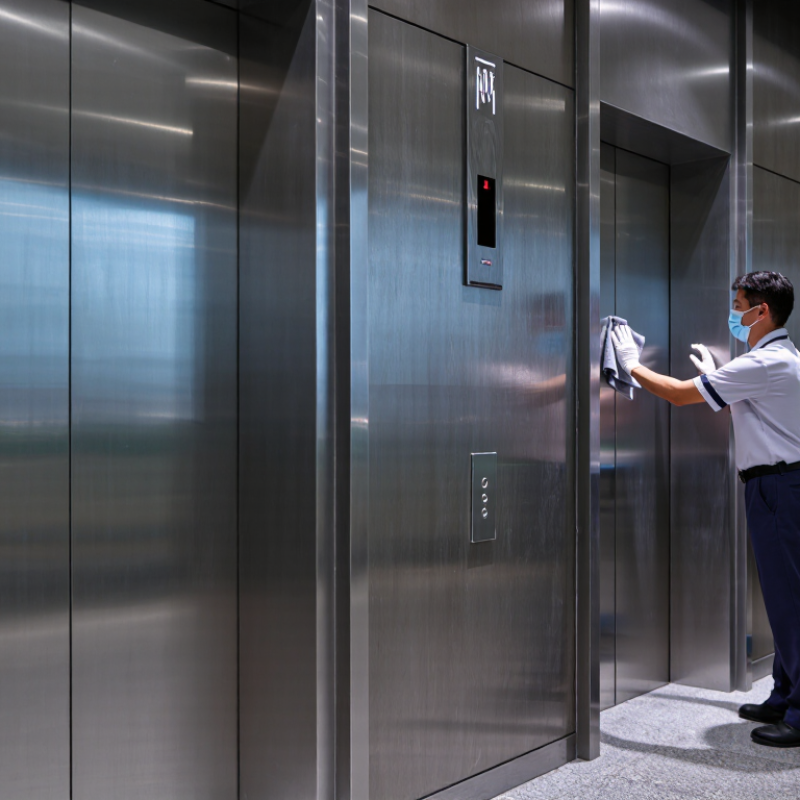
How to clean and maintain stainless steel elevator doors? This question matters in busy offices, hotels, hospitals, and residential towers. Elevator doors face fingerprints, trolley impacts, shoe marks, cleaning chemicals, and fine dust every day. Their polished surface may look strong, but it can scratch and stain easily. Elevator maintenance specialist Michael R. Lane advises, “Clean with the grain, not against it.” This simple rule helps protect the door’s brushed pattern and reduces visible streaks.
A reliable routine starts with a dry microfiber cloth. Remove loose dust before applying any liquid. Then use warm water and a small amount of neutral detergent. Wipe in the direction of the stainless-steel grain. Dry the surface immediately, especially around the door seam and lower panels. Standing moisture can leave marks or encourage corrosion near damaged areas. Never use steel wool, rough pads, chlorine bleach, or aggressive acidic cleaners. Test unfamiliar products on a hidden section first. Small details matter.
Technicians should inspect the door edges, tracks, handles, and sensor areas during cleaning. Keep liquids away from control panels and door mechanisms. Follow the elevator manufacturer’s maintenance instructions. Record unusual scratches, discoloration, loose trim, or slow door movement. These signs may need professional attention. A clean door is not automatically a safe door. That distinction is easy to miss.
This guide combines practical cleaning experience with corrosion-control principles. Still, no routine is perfect. High-traffic buildings may need daily wiping, while quieter properties may need less frequent care. Observe the surface, adjust the schedule, and review the results honestly. Fancy products are not always better. Consistency usually wins.
Stainless steel elevator doors look uniform, but their surfaces can behave very differently. Brushed finishes contain fine directional lines that hide fingerprints and minor marks. Mirror finishes reflect light sharply and reveal every smear. Patterned or coated surfaces may require gentler care. Always identify the finish before choosing a cleaning method.
In routine maintenance, remove dust with a clean microfiber cloth. Wipe with warm water and a small amount of neutral detergent. Follow the grain on brushed steel, never across it. Dry the door immediately to prevent water spots. For mirror finishes, use overlapping strokes and inspect the surface from different angles. Avoid steel wool, rough pads, and chlorine-based cleaners. They can scratch or discolor the surface. I have seen small scratches become more visible after repeated careless wiping. The cleaning process felt harmless, but the finish remembered it.
Tips:
Cleaning stainless steel elevator doors begins with choosing safe, compatible tools. Use clean microfiber cloths, soft detailing brushes, disposable gloves, and a small bucket. A pH-neutral cleaner is usually a dependable choice for routine soil. Distilled water can reduce mineral marks in hard-water areas. Avoid abrasive pads, steel wool, powdered cleaners, and unapproved acidic solutions. They can scratch the surface or damage its protective layer.
Before applying any product, check the elevator manufacturer’s care instructions and test a hidden corner. Spray the cleaner onto the cloth, never directly into door gaps, sensors, or control panels. Wipe with the direction of the metal grain. Small circular motions may leave visible swirls. Use a second damp cloth to remove residue, then dry the surface completely. It should feel clean, not greasy.
For ongoing maintenance, select a residue-free stainless steel treatment designed for architectural metal. Use only a thin layer. Heavy polish can attract dust and create slippery fingerprints around touch areas. I have seen doors look polished but feel sticky after excessive product use. That is a useful warning. Inspect edges, thresholds, handles, and lower panels weekly in busy buildings. Record unusual discoloration, rust-like spots, or damaged finishes, and refer serious problems to a qualified elevator service professional. Clean tools matter too. A cloth used on dirty flooring can quietly scratch a polished door.
Stainless steel elevator doors collect dust, oily fingerprints, and stubborn stains within hours. The cleaning method matters. Start with a dry microfiber cloth, moving with the metal grain. This removes loose dust without dragging grit across the surface. Add warm water and a small amount of neutral detergent for dirt. Keep the cloth damp, not wet. Water should never run into door gaps, sensors, or control panels.
The U.S. Centers for Disease Control and Prevention advises cleaning frequently touched surfaces at least once daily in community settings. Elevator doors deserve similar attention in busy buildings. For fingerprints, wipe promptly with diluted detergent, then dry completely. For adhesive marks or mineral spots, use a stainless-steel-safe cleaner after testing an unseen area. Never use steel wool, chlorine bleach, or abrasive powders. They can scratch the finish or create corrosion points. OSHA cleaning guidance also supports following product labels and using suitable protective equipment.
Stubborn stains need patience. Apply the cleaner to the cloth, not directly to the door, and leave it briefly. Wipe gently. Repeat if needed. Do not scrub harder automatically. That is a common mistake. A spotless appearance can still hide residue around door edges and handles. Inspect these areas under bright side lighting. Facility teams should record cleaning times, product dilution, and visible defects. This creates practical evidence for maintenance decisions. In my experience, inconsistent drying causes more complaints than light dust. The process is simple, but rushed work remains surprisingly easy to notice.
How to Clean and Maintain Stainless Steel Elevator Doors
Elevator doors collect fingerprints, skin oils, dust, and frequent hand contact. A 2020 laboratory study reported that viable coronavirus remained on stainless steel for up to 72 hours. Cleaning must therefore remove soil before disinfection begins. It matters.
Wear gloves and improve ventilation. Remove visible dirt with a soft microfiber cloth and a neutral detergent. Use clean water afterward, because detergent residue can dull the surface. Never spray liquid directly into door gaps, sensors, or control panels. Apply it to the cloth instead.
For disinfection, select an approved product and follow its label contact time. The U.S. Environmental Protection Agency explains that a surface must stay visibly wet for the stated period to support the product’s claim. Wipe in the direction of the steel grain, not in circles. Chloride-rich cleaners, steel wool, and abrasive powders may cause staining or scratches, a risk highlighted in stainless-steel maintenance guidance from the Nickel Institute. I have seen polished doors lose their even finish after one rushed cleaning.
After disinfecting, dry the door completely with a fresh microfiber cloth. For polishing, use a stainless-steel cleaner compatible with the door’s finish, applying a small amount along the grain. Test an unseen corner first. This step is easy to skip, yet it prevents a broad repair problem. Review the method regularly, because fingerprints, disinfectant residue, and local water quality can change the required cleaning frequency.
This practical schedule helps protect stainless steel elevator doors from fingerprints, mineral deposits, and surface damage. Use a soft microfiber cloth, a mild pH-neutral detergent, clean water for rinsing, and dry the surface with the grain. Avoid abrasive pads, chloride-based cleaners, and leaving moisture on the metal.
Stainless steel elevator doors need more than occasional polishing. A clear inspection routine helps reveal small problems before they become expensive repairs. Check the door surface for fingerprints, water spots, scratches, rust stains, and dents. Look closely near the bottom edge, where dust and cleaning moisture often collect. Observe whether the panels move smoothly and meet evenly without unusual noise.
Clean the doors with a soft microfiber cloth and a mild, neutral cleaner. Wipe in the direction of the steel grain, then dry the surface completely. Avoid abrasive pads, chlorine-based products, and excessive water. These can damage the finish or leave marks around seams. Protection starts with simple habits. Keep carts, tools, and wet materials away from the door panels. Do not apply wax unless the surface-care instructions specifically allow it.
Use a practical maintenance schedule. Perform a quick visual check each day in busy buildings. Clean visible marks several times a week, especially around hand-contact areas. Arrange a documented inspection each month, including door alignment, edges, sensors, and operating sounds. A qualified elevator technician should handle mechanical adjustments and safety-related work. Local requirements and the equipment manual should guide professional service intervals.
Small details matter. A checklist can still be missed during a busy shift. Review it regularly, and change the schedule when traffic, humidity, or construction conditions change.
Brushed steel has directional lines that hide fingerprints. Mirror steel reflects light and shows every smear. Patterned surfaces may need gentler care. The wrong cleaner can leave scratches or discoloration.
Use clean microfiber cloths, a soft detailing brush, gloves, and a small bucket. Choose warm water and a mild, pH-neutral cleaner. Distilled water can reduce mineral marks. Keep dirty floor cloths away from the doors.
Follow the visible grain with gentle, straight strokes. Do not wipe across the lines. Use one cloth for cleaning and another for drying. Dry the door immediately.
Apply cleaner to the cloth, never directly onto the door. Use overlapping strokes and inspect the surface from different angles. Remove residue with a damp cloth. Dry it fully.
Avoid steel wool, rough pads, powdered cleaners, and chlorine-based products. Unapproved acidic solutions may also damage the protective layer. Never scrub harder when a mark remains. That often makes the damage more obvious.
Remove fingerprints near handles daily in busy buildings. Fresh water spots are usually manageable with neutral cleaner and quick drying. Skin oils can create a dull film. Small details matter.
Check lower panels, edges, thresholds, handles, seams, and door gaps. Dust and moisture often collect along the bottom edge. Keep liquids away from sensors and control panels. Inspect unusual rust-like spots carefully.
Perform a quick visual check each day in busy buildings. Clean visible marks several times weekly. Record a detailed inspection monthly. Adjust the schedule for heavy traffic, humidity, or nearby construction.
Contact a qualified professional for deep scratches, dents, unusual operating sounds, or uneven door movement. Mechanical adjustments and safety-related work require trained service personnel. Aggressive polishing is not a repair plan. It can worsen the finish.
How to clean and maintain stainless steel elevator doors? Start by identifying the door’s surface type and finish, since brushed, polished, and textured stainless steel may require different care. Use soft microfiber cloths, clean water, mild detergent, and non-abrasive tools to avoid scratches or dull marks. Remove dust and loose dirt first, then wipe fingerprints, grease, and stains gently in the direction of the metal grain. For stubborn spots, allow a suitable cleaning solution to work briefly instead of scrubbing aggressively.
After cleaning, disinfect the doors with a compatible, non-corrosive product and wipe away any residue. A dry microfiber cloth can restore a clean, even appearance without damaging the finish. Regular inspections should check for scratches, corrosion, loose fittings, unusual sounds, or problems around the door edges and tracks. Applying suitable protective care and following a scheduled maintenance routine can help preserve hygiene, appearance, smooth operation, and long-term durability.

DHI Lift