Panoramic elevators turn ordinary vertical travel into a moving view of the city. Their glass walls may face strong wind, heavy rain, snow, heat, and sudden temperature changes. Yet clear visibility is only one part of the design. Structural safety, passenger comfort, drainage, ventilation, and emergency access must work together.
How do panoramic elevators handle extreme weather conditions? Engineers begin with local climate data, building height, wind exposure, and installation conditions. Laminated or insulated safety glass can reduce impact risks and temperature transfer. Strong frames, sealed joints, corrosion-resistant components, and carefully designed drainage systems help protect the cabin and shaft. Wind sensors and building control systems may also support safe operation during severe conditions. Certified professionals should verify these choices through calculations, inspections, and controlled testing.
Weather is never polite.
In real buildings, performance also depends on maintenance. A blocked drain, worn seal, or neglected sensor can weaken an otherwise advanced system. Technicians should inspect glass edges, guide rails, door mechanisms, electrical equipment, and emergency communication devices. Operational limits must remain clear, because no panoramic elevator is invincible. This article examines the practical engineering behind weather resistance, while recognizing an important truth: reliable safety comes from design, testing, and continuous care, not attractive glass alone. Experiences from installers, manufacturers, and facility teams can reveal where theory meets difficult conditions. Some assumptions may fail in unusual storms, and that deserves honest review.
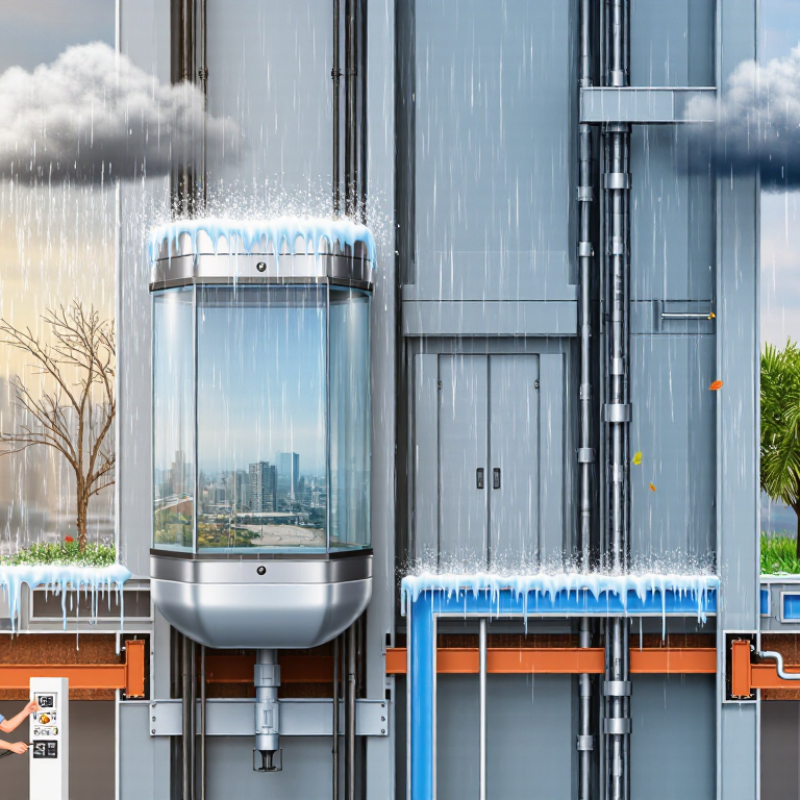
Why Do Panoramic Elevators Handle Extreme Weather?
Panoramic elevators face wind, rain, heat, cold, and sudden temperature changes. Their glass walls expose every weakness in the enclosure. A reliable design starts with local climate data and site inspections. Engineers calculate wind pressure, snow loads, seismic movement, and thermal expansion. They also examine nearby buildings that may create wind tunnels. Small details matter. Strong frame connections reduce movement around the glass panels. Laminated, heat-treated glass improves impact resistance and limits dangerous shattering. However, glass alone cannot protect the cabin.
Extreme weather resistance depends on the complete elevator system. Multiple seals block rain from entering joints and door tracks. Sloped surfaces guide water toward controlled drainage points. Ventilation reduces condensation behind interior panels. Protective coatings can slow corrosion on exposed metal components. During inspections, technicians check gaskets, drainage channels, sensors, and emergency communication equipment. They should also test performance after storms, not only during routine maintenance.
No design is flawless. A seal may harden earlier than expected. A drainage opening may collect leaves or ice. These failures are easy to overlook during factory testing. For that reason, experienced project teams review maintenance records and weather history before approving a design. They follow recognized safety standards and local building requirements. Engineers may also add wind locks, backup power, and temperature monitoring where conditions demand them. The goal is not to make a panoramic elevator invincible. It is to control predictable risks, inspect hidden weaknesses, and improve the design when real weather reveals its limits.
Panoramic elevators face wind, rain, snow, and ice through wide glass walls and exposed shafts. Their structural materials must resist changing loads, not only look elegant. Laminated safety glass helps contain broken fragments after impact. Tempered outer panels improve strength against sudden temperature changes. However, glass performance depends on thickness, framing, and proper edge protection.
Engineers use corrosion-resistant steel or treated aluminum for frames, guides, and exterior supports. These materials must tolerate moisture without losing strength. Protective coatings reduce rust around bolts, joints, and drainage points. Sealed gaskets keep driving rain from entering the cabin structure. Small drainage channels also prevent water from freezing inside hidden spaces. Ice expansion can damage seals quietly.
Wind pressure requires more than heavy materials. Structural calculations consider local wind speed, building height, panel size, and connection strength. In practical inspections, loose fasteners and blocked drains often create bigger problems than expected. Snow can collect on overhead equipment, while repeated freeze-thaw cycles open tiny gaps. Regular checks matter.
No material is invincible. A strong glass panel may still fail if its frame shifts. A weatherproof coating may also weaken after years of abrasion. Maintenance teams should inspect seals, joints, bolts, drainage paths, and glass edges after severe storms. That detail is easy to overlook. Reliability comes from materials, accurate installation, and honest inspection records.
| Structural Component | Typical Material or System | Relevant Material Data | Wind Resistance Contribution | Rain and Humidity Protection | Snow and Ice Performance | Recommended Design Measures |
|---|---|---|---|---|---|---|
| Primary steel frame | Hot-dip galvanized structural carbon steel, commonly specified to ASTM A123/A123M coating requirements | Structural steel yield strength is commonly specified around 250–355 MPa, depending on the grade. Zinc coatings provide sacrificial corrosion protection. | High | Galvanizing protects exposed steel from moisture; sealed joints and drainage paths reduce water retention. | High | Use engineered bracing, corrosion-resistant fasteners, and protective detailing at cut edges, welds, and connection points. |
| Stainless-steel exterior members | 304 stainless steel for ordinary outdoor exposure; 316 stainless steel for coastal or chloride-rich environments | Typical tensile strength is approximately 515 MPa for annealed 304 and 515 MPa or higher for many 316 products; actual values depend on product form and specification. | High | Excellent resistance to atmospheric corrosion; 316 stainless steel offers improved resistance to chlorides compared with 304. | High | Avoid crevices and incompatible metal contact; specify passivation and provide cleanable surfaces where de-icing salts may accumulate. |
| Laminated safety glazing | Heat-treated laminated architectural glass, such as two glass plies bonded with an interlayer | Laminated glass remains held together after breakage. Interlayers such as PVB or ionoplast improve post-breakage retention; thickness and makeup must be calculated for the project wind load. | High when engineered | Continuous gaskets, pressure plates, and properly designed weep systems limit water penetration. | High | Use safety glazing compliant with applicable building codes, edge protection, adequate bite, and a system tested for the specified wind pressure. |
| Aluminum framing and pressure plates | Architectural aluminum alloys such as 6063-T5/T6 or 6061-T6, selected according to structural requirements | 6061-T6 aluminum has a typical yield strength near 240 MPa; 6063 alloys generally provide excellent extrudability and surface finish, with lower structural strength than 6061-T6. | Medium to high | Natural oxide protection is enhanced by anodizing or powder coating; thermal movement must be accommodated in joints. | High | Use thermally compatible gaskets, slotted connections, expansion joints, and drainage channels to prevent trapped water and ice expansion. |
| EPDM weather seals | Ethylene propylene diene monomer rubber gaskets and setting blocks | EPDM generally performs over a broad outdoor temperature range, often approximately −45°C to +150°C depending on formulation and service conditions. | Medium | Provides durable compression seals against wind-driven rain and humidity when correctly sized and installed. | High | Maintain continuous compression, avoid overstretching, and replace seals that become brittle, permanently compressed, or mechanically damaged. |
| Silicone structural and weather sealant | Neutral-cure architectural silicone selected for glass, metal, and exterior facade applications | High-quality architectural silicones accommodate substantial joint movement; the exact movement capability is product-specific and must be verified in the technical data sheet. | High when properly bonded | Forms flexible, water-resistant joints around glazing and frame interfaces; adhesion testing is required for unfamiliar substrates. | High | Use compatible primers where required, control joint geometry, and protect uncured sealant from rain, frost, and contamination. |
| Thermal breaks | Polyamide profiles or other low-conductivity separators between interior and exterior aluminum sections | Polyamide has much lower thermal conductivity than aluminum, helping reduce conductive heat transfer through the frame. | Indirect contribution | Warmer interior frame surfaces reduce condensation risk, which helps protect seals, finishes, and electrical components. | High | Combine thermal breaks with insulated glazing, proper drainage, and controlled interior humidity to reduce frost formation. |
| Elevator shaft and pit drainage | Waterproofed pit construction, graded drainage, sump arrangements, and corrosion-resistant drainage hardware | Drainage capacity is project-specific and should reflect local rainfall intensity, groundwater conditions, and code requirements rather than a universal value. | Indirect contribution | Removes infiltrated or condensation water before it reaches guide rails, buffers, electrical equipment, or structural connections. | High | Provide accessible drains, backflow protection where required, water-level monitoring, and emergency procedures for freezing conditions. |
| Corrosion-resistant fasteners | Stainless-steel or coated fasteners selected for the exposure category and compatible with adjacent metals | Fastener performance depends on grade, coating, preload, connection design, and environmental exposure; avoid direct contact combinations that promote galvanic corrosion. | High | Maintains connection capacity by limiting rust, section loss, and seized threads in wet environments. | High | Use isolation washers or sleeves where needed, maintain specified tightening torque, and inspect exposed connections periodically. |
| Wind-load and ice-load design system | Site-specific structural calculation based on applicable building and elevator standards | Wind pressure varies with basic wind speed, exposure, height, shape, and local code. Ice accumulation increases dead load and can alter the effective wind area. | Essential | Pressure-equalized or drained facade details reduce wind-driven rain entry. | Essential | Verify the complete assembly for wind, seismic effects where applicable, temperature movement, snow drift, ice accretion, serviceability deflection, and emergency operation. |
Panoramic elevators rely on careful sealing to protect passengers and internal equipment. Their glass walls meet metal frames through layered gaskets and pressure-resistant joints. These seals reduce wind-driven rain, dust, and cold-air penetration.
During inspections, technicians check corners, door edges, and flexible joints first. Small gaps can become serious problems during storms. No seal lasts forever. Heat, sunlight, and repeated movement slowly weaken it.
Drainage is equally important. Water must leave the elevator structure quickly, rather than collect beneath the floor or around guide components. Sloped channels, hidden outlets, and overflow paths help control heavy rainfall.
In freezing climates, drainage points need protection from ice blockage. Climate control then keeps the cabin comfortable and protects sensitive systems. Heating limits condensation, while ventilation reduces humidity and glass fogging. Cooling prevents excessive heat near sun-facing panels.
These systems must work together, not separately. Poor coordination can still create moisture problems.
Tips: Inspect seals before the storm season. Clear drainage outlets regularly. Watch for fogged glass, unusual drafts, or damp floor edges. Use temperature and humidity records to identify gradual changes. A practical detail matters here: cleaning products should not damage rubber seals or drainage coatings. Maintenance teams should follow tested procedures, but they should also question outdated assumptions. Weather patterns are changing, and yesterday’s inspection schedule may be insufficient.
Why Do Panoramic Elevators Handle Extreme Weather?
Panoramic elevators face stronger exposure than enclosed models. Their glass walls meet wind pressure, flying debris, rain, and sudden temperature changes. Engineers use laminated safety glass, reinforced frames, and sealed joints to reduce cracking and water entry. The shaft and supporting structure must also resist movement during severe gusts. Yet glass alone is not enough. Regular inspections check seals, drainage channels, bolts, and unusual frame stress.
Storm safety depends on controlled operation. Wind sensors or building management systems may stop service when conditions become unsafe. Elevators can also return to a designated floor before a storm intensifies. Lightning protection relies on the building’s grounding network, bonding, and surge protection. These systems guide electrical energy away from sensitive controls. They do not make the elevator immune to lightning.
Power failure brings a different risk. Emergency lighting, alarms, communication devices, and battery-supported rescue systems help passengers remain visible and connected. Mechanical brakes and overspeed governors provide protection if normal control power disappears. Some systems lower the car to the nearest floor, but performance depends on battery condition and load. This detail is often overlooked.
A careful maintenance record matters. Small water leaks can become major control faults. I would not treat a successful test as permanent proof of safety. Weather patterns change, equipment ages, and emergency procedures may need revision. Trained technicians should test these functions under approved procedures, never during an actual storm.
Panoramic elevators face wind, rain, snow, heat, and airborne salt. Their glass enclosures reduce exposure, but they do not remove weather risks. Strong gusts can increase vibration around doors and guide components. Heavy rain may enter poorly sealed joints. Cold weather can stiffen seals and affect door movement. Regular inspection keeps small defects from becoming operational hazards.
Technicians should examine glass panels, gaskets, drainage channels, fasteners, and shaft seals after severe weather. They should check for cracks, clouding, loose fittings, and water marks. A blocked drain can leave water near electrical equipment. That detail is easy to miss. Door rollers, brakes, traction systems, and emergency communication devices also require functional tests. Maintenance records should include weather conditions, readings, repairs, and follow-up dates. Qualified personnel must follow procedures required by local elevator regulations.
Salt air deserves extra attention in coastal locations. It can corrode metal surfaces even when damage looks minor. During freezing conditions, ice around entrances needs careful removal without striking the glass. After a storm, operators should inspect the elevator before returning it to normal service. Not every problem is visible. A clean panel can hide a weakened seal. In practice, inspection schedules may need adjustment. A fixed calendar alone is not enough when weather changes quickly.
Wide glass walls face wind, rain, heat, snow, and sudden temperature changes. Small enclosure weaknesses can become serious problems.
Engineers study climate data, site conditions, wind pressure, snow loads, seismic movement, and thermal expansion. Nearby buildings may also create wind tunnels.
Laminated safety glass helps contain fragments after impact. Tempered panels handle temperature changes. Corrosion-resistant steel or treated aluminum supports exposed structures.
No. Strong framing, protected edges, sealed joints, drainage paths, and accurate installation are also necessary. Glass is only one part.
Multiple seals block driving rain. Sloped surfaces direct water into drainage channels. These channels must stay clear of leaves, dirt, and ice.
They should examine glass edges, gaskets, bolts, drains, shaft seals, doors, brakes, sensors, and emergency communication equipment. Water marks matter.
Airborne salt can corrode bolts, frames, and joints. Damage may look minor at first. Regular cleaning and detailed inspections remain necessary.
Cold can stiffen seals and doors. Ice may expand inside hidden gaps. Careful removal is needed, especially around glass entrances.
Records should note weather conditions, inspection readings, repairs, and follow-up dates. A fixed calendar may not match rapidly changing weather.
No design is flawless. A seal can harden early, and a coating can weaken. Honest inspections reveal limits and support better decisions.
Panoramic elevators are engineered to provide reliable transportation even when exposed to strong winds, heavy rain, snow, ice, and sudden temperature changes. How do panoramic elevators handle extreme weather conditions? Their performance depends on a combination of reinforced structural materials, carefully designed glass and metal enclosures, and supports that reduce movement caused by wind. Protective coatings help resist moisture and corrosion, while sealed joints, sloped surfaces, and drainage channels prevent water and melting snow from entering sensitive areas.
Inside the elevator, climate control systems help maintain suitable temperature and humidity levels, reducing condensation and equipment stress. Safety mechanisms can pause operation during severe storms, detect abnormal movement, provide emergency communication, and protect passengers during lightning events or power failures through backup systems. Regular inspections are also essential, especially after harsh weather. Technicians should check seals, drainage paths, electrical components, door systems, structural connections, and emergency equipment to ensure the elevator remains safe, stable, and dependable throughout changing environmental conditions.

DHI Lift