How to modernize an old passenger elevator? This question involves more than replacing worn buttons or installing a polished stainless-steel cabin. A reliable modernization plan begins with a careful inspection of the elevator’s age, travel height, loading pattern, shaft condition, doors, controls, and machine room. Experienced elevator professionals can identify hidden risks, such as brittle wiring, uneven leveling, noisy brakes, or outdated emergency communication equipment.
The practical goal is safer, smoother, and more dependable travel. A typical project may include a new control system, variable-frequency drive, door operator, machine, fixtures, lighting, and car operating panel. LED lighting can brighten a dim cabin. New door sensors can reduce repeated closing faults. Better leveling helps passengers step across the threshold with confidence, especially when carrying luggage or using mobility equipment. Accessibility, fire safety, evacuation procedures, and local inspection requirements must guide every design decision.
It is not always necessary to replace everything. Sometimes, retaining a sound hoisting machine reduces cost and construction disruption. Sometimes, that choice only postpones a larger problem. No modernization plan is perfect. Building owners should compare lifecycle costs, maintenance records, downtime, energy use, and future parts availability. They should also ask contractors for documented experience with similar passenger elevators, clear testing procedures, and realistic schedules. A modern-looking cabin means little if the elevator still stops roughly, traps heat, or leaves technicians searching for obsolete components. Careful planning turns an aging lift into a quieter, safer, and more useful part of the building.
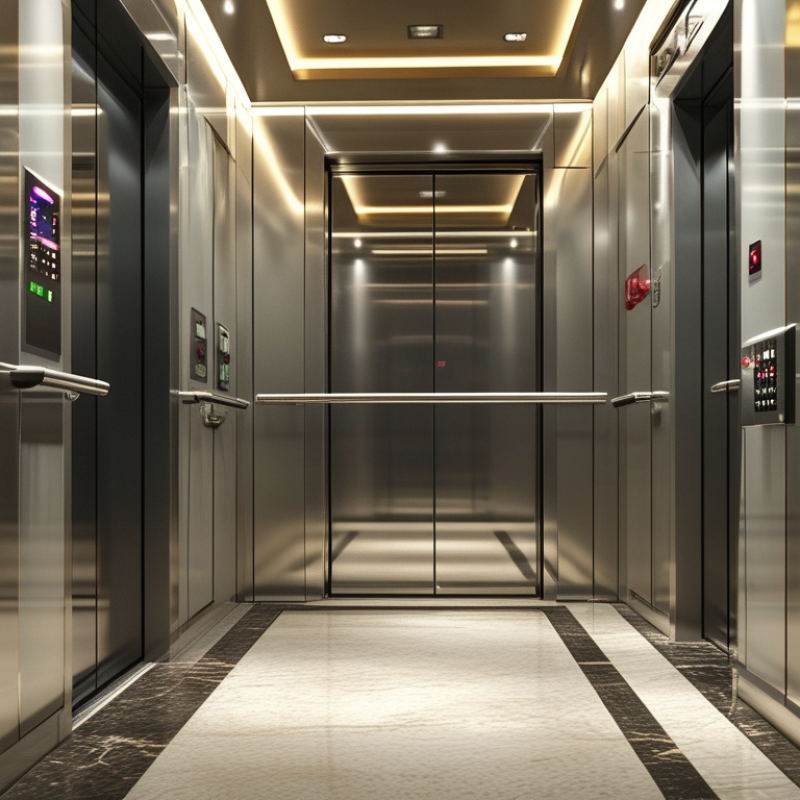
Assess the Elevator’s Current Condition and Modernization Needs
An old passenger elevator should not be modernized by appearance alone. During a site assessment, qualified elevator professionals inspect the car, shaft, doors, machine room, pit, and control equipment. They check unusual vibration, delayed door movement, uneven floor leveling, oil leaks, and worn cables. A smooth ride can mislead. Hidden wear may still affect safety and reliability.
Maintenance records reveal useful patterns. Frequent call-backs, repeated door faults, and unavailable replacement parts may indicate deeper modernization needs. The inspection should also review emergency communication, lighting, alarm functions, fire-service operation, and accessibility. Local safety requirements must guide every recommendation. A condition report should separate urgent repairs from long-term upgrades. Not every old component needs immediate replacement, but postponing critical work can increase downtime and costs.
Tips:
Record ride quality at different floors. Listen for scraping or humming sounds. Measure door opening and closing times. Check whether the car stops level with each landing. Ask for an independent inspection, not only a sales proposal. Compare repair history with expected future use. A busy residential elevator may need stronger reliability improvements than a lightly used private lift. My assessment may not be perfect; building conditions, usage, and maintenance quality can change the conclusion. Recheck uncertain findings before approving major work.
Define Safety, Accessibility, Energy, and Performance Requirements
How to Modernize an Old Passenger Elevator?
Define Safety, Accessibility, Energy, and Performance Requirements
Modernization should begin with a documented site assessment, not a parts list. Inspect the hoistway, car frame, doors, wiring, controls, and machine room. Record unusual vibration, delayed leveling, noisy brakes, and failed door sensors. These details reveal risks that routine operation can hide. Review current local safety codes and inspection requirements with a qualified elevator professional.
Safety requirements should cover controlled stopping, emergency communication, fire response, door protection, and safe access for technicians. Accessibility needs practical measurements. Check the clear door opening, car dimensions, handrail position, floor accuracy, button height, tactile markings, and audible announcements. A wheelchair should enter without scraping the threshold. A passenger with limited vision should understand each stop.
Energy planning includes efficient motors, standby lighting, regenerative operation where suitable, and reduced heat from control equipment. Performance targets should state travel speed, acceleration comfort, leveling accuracy, door cycle time, noise limits, and expected availability. Measure existing performance before setting improvement goals. Perfect data is unlikely. Some old drawings may be missing. That uncertainty should be recorded, not ignored. Test the modernized system under normal traffic and heavier loads. Keep a clear maintenance record after handover. Small faults often appear weeks later. Consistent monitoring can catch them early.
How to Modernize an Old Passenger Elevator?
Define safety, accessibility, energy, and performance requirements before selecting modernization solutions.
The scores are normalized planning benchmarks from 0 to 100, where a higher score indicates stronger alignment with current modernization expectations. Safety and emergency communication receive the highest targets, while accessibility, energy efficiency, and ride performance require measurable improvements such as accurate floor leveling, accessible controls, efficient standby operation, smoother acceleration, and reduced unplanned downtime. Final requirements must be verified against applicable local elevator and accessibility regulations.
Upgrade the Elevator’s Control, Drive, and Operating Systems
Modernizing an old passenger elevator starts with its control system, not its cabin finishes. A new controller can replace relay logic with programmable monitoring, fault logs, door protection, and more accurate floor positioning. The U.S. Department of Energy reports that advanced building controls can reduce commercial energy use by roughly 10–20%. Elevator controls will not deliver that entire saving, but they can reduce idle operation and unnecessary starts.
The drive deserves equal attention. Replacing an aging motor drive with a variable-frequency drive can improve acceleration, leveling, and ride comfort. It also reduces mechanical shock in ropes, brakes, and traction components. The International Energy Agency states that buildings consume about 30% of global final energy, making efficient operating equipment increasingly important. Still, efficiency claims need site measurements. A poorly tuned drive may create vibration, noise, or uneven stopping.
Operating systems should connect the controller, door operator, emergency communication, and maintenance dashboard. Technicians need clear fault histories, not vague error codes. Passengers need dependable leveling, responsive doors, readable indicators, and accessible controls. Cybersecurity also belongs in the specification, especially when remote diagnostics are enabled.
Old wiring can mislead.
A practical modernization survey should record motor current, door cycles, leveling accuracy, fault frequency, and standby consumption before installation. Afterward, technicians should compare the same measurements under similar traffic conditions. Some projects overlook this step. That weakens the evidence and can hide recurring problems behind attractive new panels.
Improve the Cabin, Doors, Lighting, and Passenger Information Features
Modernizing an old passenger elevator should begin inside the cabin, where every defect becomes visible. Replace worn wall panels with durable, cleanable surfaces. Keep handrails continuous and controls reachable from a seated position. The World Health Organization reports that 1.3 billion people live with significant disability. Accessibility is a daily design requirement, not a decorative upgrade. Use high-contrast buttons, tactile labels, and clear floor announcements. A beautiful cabin can still exclude people.
Door performance deserves equal attention. Sensors should detect a child’s hand, mobility aid, or slow movement without nuisance reopening. Check leveling at every landing; even a small step can cause trips. EN 81-20 specifies at least 100 lux of car lighting at floor level. Emergency lighting must remain available during power loss. Use even, low-glare LEDs, not bright spots above the mirror. Passenger information should show direction, floor, service status, and emergency instructions visually and audibly. The ADA Standards 2010, Section 407, offers a practical accessibility benchmark.
Tips: Ask a qualified elevator professional to measure door force, closing speed, illumination, alarm audibility, and leveling before approval. Compare readings after installation. The International Energy Agency’s Energy Efficiency 2023 report identifies efficient lighting as a practical energy-saving measure, but lighting alone cannot fix an inefficient drive. Leave space for future displays and software updates. I have seen projects over-polish the cabin while ignoring confusing announcements. That mistake is easy to repeat.
Test, Certify, and Maintain the Modernized Passenger Elevator
Modernizing an old passenger elevator does not end when new equipment is installed.
Testing must prove that the complete system works together. A qualified technician should inspect the controller, motor, brakes, door locks, buffers, and alarm devices. The elevator should be tested with empty and rated loads. Watch the car stop level with the landing. Even a small height difference can create a trip hazard. Door reopening sensors need repeated checks. They must react to a hand, not only a test object. Emergency lighting and communication equipment also require practical tests. Press the alarm. Confirm that someone receives it.
Certification should follow the requirements of the local authority and applicable safety standards.
An independent inspector can review test results, machine-room conditions, drawings, and safety components. Keep signed records, calibration details, defect reports, and repair dates in one controlled file. This evidence helps owners prove due diligence and plan future work. A certificate is not a permanent guarantee. It confirms compliance at a specific inspection time. That distinction matters. Field inspections often reveal that teams focus on appearance while overlooking old wiring or water damage. Clean cabins can hide unreliable door circuits.
The lesson is uncomfortable: visible improvements may create false confidence.
Maintenance should begin immediately after handover.
Set inspection intervals according to usage, age, environment, and technical instructions. Check door rollers, guides, brake performance, leveling, vibration, and fault logs. Record small changes before they become shutdowns. Ask technicians to describe the fault, not merely mark it “adjusted.” A monthly review of repeated faults can reveal deeper design or installation problems. Do not reset recurring alarms without investigation. Train staff to report scraping sounds, delayed doors, and uneven stops. Keep passengers away during faults.
Good maintenance is disciplined, documented, and repetitive. It is also where many modernization plans fall short.
Conclusion
How to modernize an old passenger elevator? Begin by assessing its current condition, including the cabin, doors, machinery, wiring, controls, and safety devices. This evaluation helps identify outdated components, recurring faults, accessibility limitations, energy waste, and performance concerns. Based on the findings, establish clear modernization requirements for safety, smooth operation, passenger comfort, accessibility, energy efficiency, and compliance with applicable standards.
The modernization process may include upgrading the control system, drive equipment, operating panels, and communication functions to improve reliability and ride quality. The cabin can also be refreshed with durable finishes, better lighting, improved ventilation, accessible buttons, and clear passenger information displays. Door operators and sensors should be upgraded to support safe, quiet, and dependable movement. After installation, the elevator must undergo thorough testing, adjustment, inspection, and certification by qualified professionals. A planned maintenance program will help preserve performance, detect developing problems early, and extend the elevator’s useful service life.

 DHI Lift