What are the legal requirements for wheelchair-accessible elevators? The answer depends on location, building use, and elevator type. National laws often set minimum access standards, while local authorities control permits, inspections, and enforcement.
The World Health Organization reported in 2022 that approximately 1.3 billion people experience significant disability worldwide. That figure gives accessibility a human scale. It also exposes a common weakness: legal compliance is not always practical usability. Ron Mace, an architect and pioneer of universal design, stated, “The intent of universal design is to simplify life for everyone.” A compliant elevator should reflect that principle.
In the United States, the 2010 ADA Standards address accessible routes, elevator dimensions, door timing, control placement, tactile markings, audible signals, and emergency communication. The U.S. Access Board also provides technical guidance for designers and facility owners. In Europe and many other markets, EN 81-70 and ISO 21542 influence accessibility design, although national adoption can differ.
Key questions include whether the cab fits a wheelchair and companion, whether controls can be reached from a seated position, and whether floor information is visible, audible, and tactile. Emergency systems matter too. So does maintenance.
A small fault can become a serious barrier.
This article examines permits, technical dimensions, inspection duties, modernization rules, and liability concerns. It also compares elevators with platform lifts, because they are not always governed by identical rules. Legal checklists help, but they cannot replace testing with real wheelchair users. That part is often overlooked.
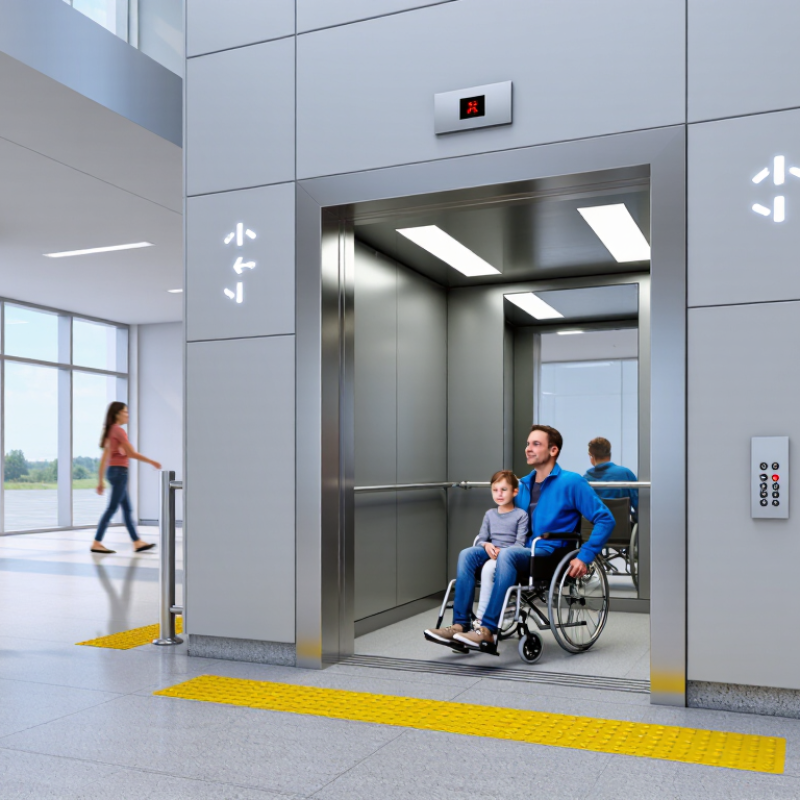
What Are the Legal Requirements for Wheelchair Elevators?
Under accessibility law, “wheelchair elevator” is not always a formal legal term. It usually describes a lift that carries a wheelchair user between different floor levels safely and independently. The legal definition depends on function, access, and installation standards, not on advertising language. A platform lift, inclined lift, or passenger elevator may qualify when it provides an accessible route.
Requirements often cover clear platform space, door width, level entry, reachable controls, handrails, lighting, and emergency communication. Controls should be usable from a seated position. The lift must also stop accurately beside each landing, without creating a dangerous gap. Local building codes may require alarms, backup power, protective barriers, inspections, or professional installation. Rules differ between countries, states, and building types. That boundary is not always obvious.
Tips: Check the applicable accessibility code before choosing equipment. Measure the wheelchair, platform, doorway, and turning space together. Ask the local building authority whether permits or inspections apply. Keep maintenance records and test alarms regularly. A design can appear accessible but fail in daily use, especially when a door closes too quickly or controls sit too high. Professional access consultants can review the route, while qualified inspectors can confirm compliance.-vesm
| Legal or Technical Dimension | What the Requirement Means | Typical Application to a Wheelchair Elevator | Primary U.S. Reference |
|---|---|---|---|
| Legal definition | U.S. accessibility rules generally regulate accessible vertical transportation rather than using one universal legal term called “wheelchair elevator.” | A device may be a passenger elevator, vertical platform lift, or inclined platform lift, depending on its design and intended use. | 2010 ADA Standards |
| Accessible route | Buildings and facilities must provide an accessible route between required accessible spaces and levels where the ADA applies. | The lift or elevator must connect the relevant floors, platforms, or raised areas without requiring a wheelchair user to use stairs. | ADA Standards §§ 206 and 215 |
| When an elevator is required | In many new construction and alteration projects, an accessible means of vertical access is required when levels are connected by stairs or other changes in elevation. | The exact obligation depends on occupancy, number of stories, floor area, exemptions, alterations, and applicable building codes. | ADA Standards § 407 |
| Platform lift exceptions | Platform lifts can be permitted in specific situations, including certain existing facilities, assembly areas, work areas, and limited vertical access conditions. | A lift should not be selected merely because it is less expensive; the applicable exception and local code must support its use. | ADA Standards §§ 206.7 and 410 |
| Clear floor or platform space | The wheelchair space must provide sufficient clear floor area for a wheelchair to enter, remain, and maneuver safely. | The required dimensions vary by equipment type and applicable standard; the manufacturer’s rated platform size must be checked against the code requirements. | ADA Standards §§ 305 and 410 |
| Door and gate clearance | Accessible entrances and doors generally require at least 32 inches of clear opening width when measured with the door open 90 degrees. | Lift entrances, landing doors, and gates must provide usable clearance and must not create hazardous gaps or obstruct wheelchair entry. | ADA Standards §§ 404 and 410 |
| Controls and operating features | Controls must be accessible, operable with one hand, and usable without tight grasping, pinching, or twisting of the wrist. | Call buttons, operating controls, emergency controls, and destination controls should be reachable from the wheelchair space and clearly identified. | ADA Standards §§ 309 and 410 |
| Level entry and landing safety | Floor and landing surfaces must be stable, firm, and slip resistant, with changes in level treated according to accessibility requirements. | The platform should align with each landing and prevent unsafe roll-off conditions through gates, interlocks, barriers, or other compliant safeguards. | ADA Standards §§ 302, 303, and 410 |
| Audible and visual information | Where required, users must receive accessible information about floor location, direction of travel, arrival, and emergency conditions. | Elevator systems commonly use visible indicators and audible signals; platform lifts must provide the features required by the governing code and equipment standard. | ADA Standards §§ 407 and 410 |
| Emergency communication | Where an emergency communication system is required, it must be usable by people with hearing and speech disabilities. | Emergency buttons, two-way communication, visual indicators, and alarm features must follow the applicable elevator and accessibility requirements. | ADA Standards §§ 407 and 410 |
| Fire and life-safety rules | Accessibility compliance does not replace fire, smoke, egress, electrical, or structural safety requirements. | The installation may require fire-rated construction, landing protection, alarms, emergency operation, and compliance with the locally adopted building and elevator codes. | Locally adopted building and fire codes |
| Permits and inspections | Most installations require approval by the authority having jurisdiction before use. | Building, electrical, structural, and elevator or lift permits may apply, followed by inspection, certification, and periodic testing under state or local rules. | State and local authorities; OSHA rules where applicable |
| Maintenance and continued usability | Accessibility features must remain available and usable; blocked landings, disabled controls, or out-of-service equipment can create compliance problems. | Owners should follow the maintenance schedule, keep safety devices operational, document inspections, and provide an accessible alternative when legally required. | ADA Standards § 4.1.2.4 and applicable local rules |
| Applicable jurisdiction | Federal accessibility law is only one part of the compliance process; state, municipal, building, fire, elevator, and electrical requirements may be stricter. | Before installation, confirm the adopted code edition, permit requirements, inspection authority, and any state-specific lift or elevator licensing rules. | ADA.gov and the local authority having jurisdiction |
Note: Requirements vary by building type, project scope, jurisdiction, and applicable code edition. This table summarizes common U.S. accessibility considerations and is not a substitute for a code review by the authority having jurisdiction or a qualified design professional.
Local building codes and accessibility rules usually apply. Requirements often cover platform size, level boarding, controls, barriers, and door safety. A few inches matter.
Controls should be reachable from a seated position. Use clear, durable symbols. Avoid placing buttons behind rails or outside comfortable reach.
The platform should have non-slip flooring and guarded edges. Obstruction sensors must stop movement quickly. Doors should use interlocks.
Emergency lowering, alarm communication, and accessible lighting are important. Test them during inspection. A quiet alarm is not useful.
They should verify shaft clearance, load capacity, drainage, fire separation, and electrical protection. Maintenance access also matters. A drawing is not enough.
Requirements depend on the location, building type, and lift design. A building permit, electrical permit, or fire-safety review may be required. Exterior installations may need zoning approval.
Drawings should show platform clearances, landing sizes, guardrails, emergency controls, and travel height. Plans may need approval from local authorities. The paperwork can be messy.
Inspectors may test door interlocks, emergency lowering, alarms, platform edges, and weight limits. Approval may lead to an operating permit or occupancy certificate. Passing paperwork does not guarantee a smooth ride.
Some areas require annual or periodic inspections by qualified technicians. Keep service reports and correction records on site. Requirements can change after renovations, ownership transfers, or serious incidents.
What are the legal requirements for wheelchair-accessible elevators? They generally include compliance with applicable accessibility, building, fire, and safety regulations. A wheelchair elevator must be designed to provide safe, independent access, with adequate platform or cabin dimensions, appropriate door widths, accessible controls, emergency communication features, stable handrails where required, and safeguards against falls, entrapment, and unexpected movement. The specific standards may vary by jurisdiction and by whether the equipment is installed in a public, commercial, residential, or industrial building.
Before operation, the installation may require building permits, electrical approvals, professional review, and inspections by authorized officials. Certification or documented testing may also be necessary to confirm that the elevator meets applicable technical requirements. Owners and operators are typically responsible for keeping access routes clear, posting operating instructions, arranging regular maintenance, maintaining inspection records, responding to safety faults promptly, and ensuring that only trained personnel perform servicing. Local authorities should always be consulted because legal obligations differ by location and building use.

 DHI Lift