Modern elevators do more than move people between floors. During a fire, dedicated controls can recall cars to a designated level, prevent ordinary passenger calls, and support trained firefighters. Understanding those actions matters: a lift that appears quiet may be responding exactly as designed. How do fire service modes work in modern elevators? The answer depends on coordinated signals, control logic, and building-specific planning—not a single button.
NFPA’s report, High-Rise Building Fires, estimates an annual average of about 14,500 fires in U.S. high-rise buildings during 2016–2020. That figure covers many fire types, not elevator incidents, but it shows why reliable building fire procedures matter. ASME A17.1/CSA B44 and NFPA 72 provide key requirements and guidance for elevator operation and fire-alarm interfaces. In practice, a detector may trigger recall; firefighters can then use designated controls to operate the car under emergency procedures. The precise sequence varies by installation and applicable requirements.
This introduction is grounded in those standards and published fire data. No source article, interview, or transcript was provided, so I cannot responsibly attribute a direct quotation to a named expert. A quotation should be verified against its original source before publication. That caution matters. Fire-service operation is life-safety equipment, not a feature to explain through invented claims. The sections ahead examine the main modes, their triggers, and what occupants and responders may see when smoke alarms sound and elevator doors close.
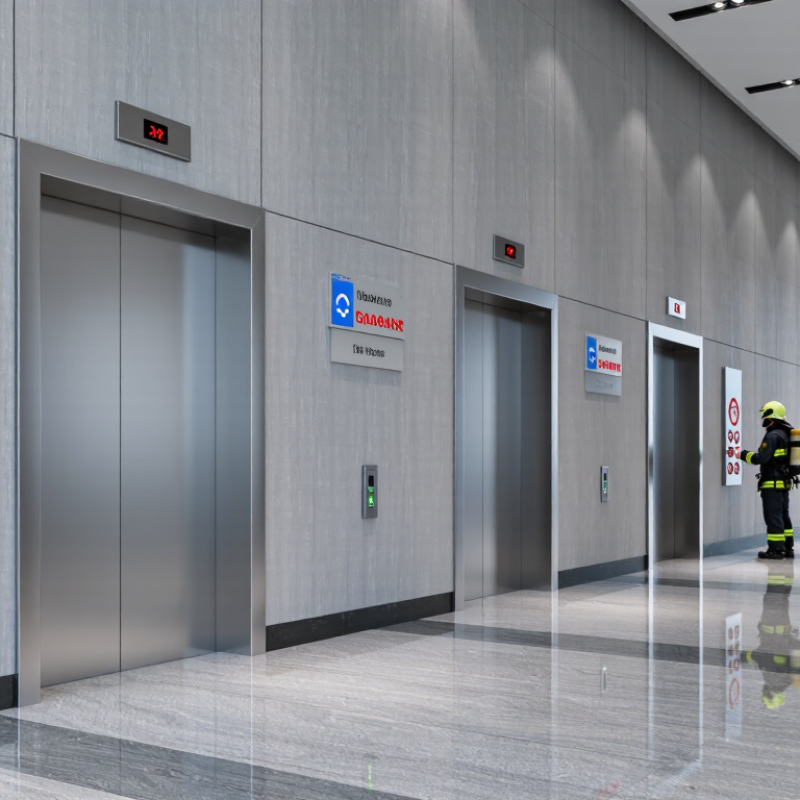
How Fire Service Modes Fit into Modern Elevator Safety
Fire-service modes connect elevator controls with a building’s fire alarm response. In many systems, Phase I recall sends cars to a designated floor and removes them from ordinary passenger calls. The selected floor depends on the building’s approved design. Smoke near that floor may trigger alternate-floor recall. Small details matter.
NFPA’s High-Rise Building Fires report, covering 2016–2020, estimated an average of 14,500 fires annually in high-rise buildings. That figure includes many types of fires, not just elevator-related incidents. It shows why coordinated response matters. Recall helps firefighters reach a planned access point, while keeping regular passengers from treating the elevator as a normal escape route.
Once firefighters enter a recalled car, Phase II controls can allow them to operate it manually, subject to the installed system and applicable requirements. They may hold a door open, select a floor, and move equipment to a fire floor. The arrangement is not magic. A blocked landing, smoke intrusion, or power problem can change what is safe. Building teams should test recall, alarm interfaces, backup power, and firefighter controls together, then document the results. Real performance depends on maintenance and the specific building—not just the panel labels.
Phase I: Automatic Fire Recall and Elevator Shutdown
Phase I begins when the building’s fire-alarm system detects smoke at a designated elevator lobby or related protected area. The signal recalls passenger cars to a designated floor, or to an alternate floor if smoke is detected at the primary one. Doors open, and ordinary hall calls are disabled. This helps limit passenger access to cars that may travel through smoke-affected areas. Under ASME A17.1/CSA B44, the exact sequence depends on the installed system and local requirements. That distinction matters.
Recall is not the same as cutting elevator power. Phase I generally removes cars from normal service; a separate water-sensitive circuit may disconnect power to protect equipment, but can also trap occupants if activated at the wrong time.
NFPA’s 2016 report on U.S. high-rise fires estimated 14,500 such fires annually from 2009 to 2013, with about 40 civilian deaths and 520 injuries per year. These figures cover all reported high-rise fires, not elevator incidents alone. They show why reliable detection and clear recall logic matter.
In real buildings, poorly placed detectors or an outdated fire-alarm interface can complicate the sequence. A test should confirm the primary and alternate recall floors, visible indicators, and door behavior. Small details count.
How Alternate-Floor Recall Works When the Main Floor Is Unsafe
When a fire alarm identifies smoke or heat near an elevator’s normal recall floor, the elevator may be directed to an alternate landing. This prevents cars from returning to a lobby that could expose passengers or firefighters to danger. The building’s fire alarm system sends a signal to the elevator controller, which follows its programmed recall sequence.
The car travels to the designated alternate floor, stops, and typically opens its doors before normal passenger service is withdrawn. That floor is selected during system design; it is not necessarily the nearest level. For example, if smoke is detected in the main lobby, recall might be set to a separate entrance level with a safer route for responders. Exact behavior depends on the building’s equipment and approved configuration.
That matters. An alternate landing is a planned fallback, not proof that the route is smoke-free. Firefighters still need to assess conditions, and building staff should know which floor receives recalled cars. During inspection, teams can verify alarm signals, floor indications, and door operation. A confusing indicator or outdated evacuation map can undermine an otherwise sound sequence. Even well-designed systems deserve that second look.
Top Fire Service Modes in Modern Elevators: Alternate-Floor Recall
The chart illustrates how a car can be redirected when the designated primary recall floor is reported unsafe.
How it works: In Phase I emergency recall, a configured fire-alarm signal can cause the elevator to return to a designated recall floor. If the primary recall floor is affected, the system may direct the car to a predesignated alternate floor instead. The car then typically opens its doors and remains out of normal service; exact operation depends on the building’s approved system and applicable codes.
Illustrative example only: floor numbers and sequence are not operating specifications.
Phase II: Firefighter-Controlled Elevator Operation
Phase II shifts elevator control to firefighters inside the car. After Phase I recall, an authorized firefighter uses the in-car keyed switch to select firefighter operation. Normal passenger calls are disabled, and the operator chooses the floor from the car panel. On many systems, the door-close button must be held until the doors shut. Controls vary by equipment and adopted code edition, so crews need to know the instructions posted in their building. That distinction matters.
NFPA’s High-Rise Building Fires report estimated an annual average of 14,500 high-rise fires in the United States from 2009 to 2013. The report also estimated 54 civilian deaths and 810 injuries each year. These figures describe the fire environment, not the effectiveness of Phase II. ASME A17.1/CSA B44 sets requirements for elevator safety and operation, but site-specific training still matters. Smoke, heat, or an unfamiliar panel can complicate a controlled trip. A checklist helps, yet it cannot replace judgment. I would not treat the key switch as a guarantee of safe travel.
Top Fire Service Modes in Modern Elevators and How They Work? - Phase II: Firefighter-Controlled Elevator Operation
| Operation Stage |
Firefighter Action |
Typical Elevator Response |
Important Operating Detail |
| Confirm Phase I recall |
Verify that the elevator has completed its required recall and is available for authorized in-car operation. |
The car is generally at a designated recall floor with its doors open, subject to the building’s approved fire-service sequence. |
Phase II is an in-car operating mode; it does not replace the building’s Phase I recall function. |
| Enable in-car operation |
Use the designated fire-service key switch in the elevator car and select the operating position shown on the car’s instructions. |
The car accepts authorized in-car commands and is generally taken out of normal passenger service. |
Key-switch labels and exact behavior can vary by elevator installation and applicable code edition. |
| Select a destination |
Press the car-call button for the required floor. |
The selected floor is registered for travel, subject to the elevator’s controls and safety systems. |
Normal hall calls are generally not served while the car is operating under Phase II. |
| Close the doors |
Press and hold the door-close button as required by the car’s instructions. |
On typical installations, the doors close while the button is held; the car can proceed when the doors are closed and safety conditions are satisfied. |
Do not attempt to force or obstruct the doors. Door-protection devices and their behavior depend on the installation and governing requirements. |
| Travel to the selected floor |
Keep the required control input active where the car’s instructions call for it, and monitor the car during travel. |
The elevator travels to the registered floor and levels at the landing under its normal motion and safety controls. |
Phase II provides firefighter control; it does not override required elevator safety interlocks. |
| Open the doors at the landing |
Use the door-open control and observe the landing before entering or exiting. |
The doors open according to the car’s control sequence. |
Check conditions at the landing before passing through the doorway; do not assume the landing is safe. |
| Continue or change the assignment |
Register another car call and operate the doors using the posted Phase II instructions. |
The car responds to in-car commands and can make additional trips while the mode remains active. |
Control priorities, button-hold requirements, and available functions are specific to the installation. |
| End Phase II operation |
Follow the building’s emergency procedures and the elevator’s posted instructions before changing the key-switch position. |
The car may return to another fire-service state or normal service, depending on the system design and sequence. |
Only authorized personnel should restore service; follow local procedures and the applicable elevator code. |
Note: This table describes typical Phase II behavior, not a substitute for site-specific training or posted operating instructions. Exact controls and sequences vary by jurisdiction, code edition, and elevator installation.
Returning Elevators to Normal Service After an Emergency
Returning an elevator to normal service is a controlled handoff, not simply a matter of switching off an alarm. Firefighters or the designated building authority must confirm the emergency is over and the elevator can be released. The exact reset sequence depends on the building’s equipment and procedures. Not yet. A quiet lobby alone is not proof that every floor is safe.
Before service resumes, trained personnel should check affected areas, including elevator entrances, the shaft, and the machine room. They look for smoke, water, unusual heat, damaged doors, and active system faults. An elevator technician may need to inspect the equipment and test its operation. A damp sill can matter. So can a door that closes slowly. If a warning remains, keep the elevator out of normal service and investigate it.
Once cleared, authorized staff reset the fire-service controls according to the site procedure. They should verify that the car responds to hall calls and travels smoothly, then tell occupants when service is available. Passengers should not operate restricted switches or try to reset the elevator themselves. The process can feel overly cautious when everyone is waiting; still, a rushed return may miss a fault that appears only during operation.
Conclusion
How do fire service modes work in modern elevators? They coordinate elevator behavior during a building emergency, helping prevent ordinary passenger use while supporting an organized response. In Phase I, the elevator system receives a fire signal and recalls cars to a designated floor, where they stop and are taken out of normal service. If that floor may be unsafe, an alternate-floor recall directs the elevators to a different designated level instead.
During Phase II, authorized firefighters can operate a car under controlled conditions, typically using in-car controls and following the building’s emergency procedures. This mode allows them to manage elevator movement as they respond, while limiting regular passenger operation. Once the emergency is over, trained personnel assess the system and confirm it is safe before elevators return to normal service. The exact sequence can vary by building, so these modes work alongside—not in place of—the site’s emergency plan.

 DHI Lift