An elevator mirror is more than a polished panel. Inside a compact cabin, it can widen the visual field, reflect faces, and soften the feeling of enclosure. Yet its purpose is often misunderstood. Why are mirrors used inside passenger elevators? They may reduce feelings of confinement, help passengers check their appearance, and improve awareness near doors and corners. For some users, especially those traveling alone, that visual connection can make a short ride feel less uncomfortable.
This guide examines ten common elevator mirror types, including flat, convex, panoramic, stainless steel, framed, tinted, and safety-backed designs. Each option changes the cabin differently. A flat mirror gives a familiar reflection. A convex mirror covers more angles but may distort faces and objects. A tinted surface can create a refined appearance, although it may reduce brightness in a small cabin. Small details matter, such as edge protection, cleaning resistance, lighting reflection, and secure installation.
Experience from commercial interiors shows that appearance alone should not control the decision. A mirror must suit the elevator’s size, traffic level, lighting, and maintenance plan. It should also be installed with suitable safety backing and professional judgment. No mirror solves every problem. Glare can distract passengers, and poor placement can make the cabin feel visually crowded. The most attractive option is not always the most practical one. This overview offers a careful starting point, while final specifications should be reviewed by qualified elevator and interior professionals.
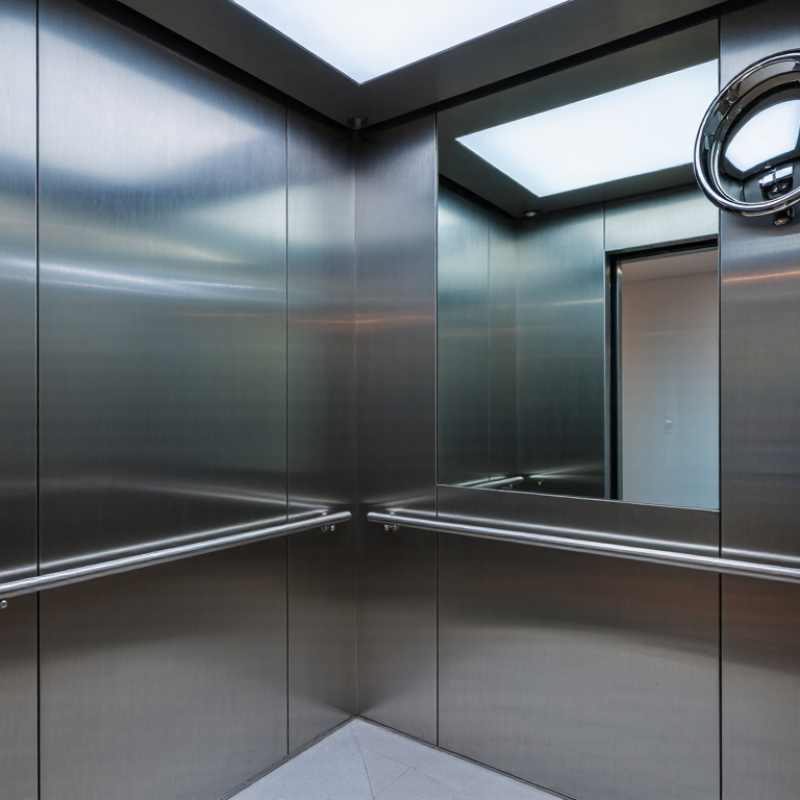
What Are Elevator Mirrors and How Do They Work?
Elevator mirrors are reflective panels installed inside lift cabins, usually on the rear or side wall. They are not only decorative. A clear reflection helps passengers see the cabin space before entering, which can reduce hesitation and improve comfort in crowded buildings. It also helps wheelchair users check their position when reversing from the elevator.
The mirror works by reflecting light from its smooth surface into the viewer’s eyes. Flat glass gives the most accurate image and suits ordinary passenger cabins. Convex mirrors show a wider area, but they make people and objects look smaller. Polished stainless steel can resist impact, although its image may appear slightly distorted. Tinted or laminated mirrors can reduce glare and improve durability when properly specified.
Small details matter. The panel should have secure edges, suitable backing, and a surface that remains clear under frequent cleaning. Designers also consider lighting, handrails, doors, and visual contrast. In practical inspections, poor lighting often makes a good mirror seem ineffective. Fingerprints reveal that problem quickly.
A mirror is not a cure-all.
Its placement must follow the elevator’s accessibility, safety, and building requirements. Maintenance teams should check loose fittings, scratches, sharp corners, and cleaning damage. Smart display mirrors may add information, but they require more testing and maintenance. Even a simple flat mirror can fail its purpose if it creates glare or blocks essential controls. That is an easy detail to overlook.
The Ten Main Types of Elevator Mirrors
Elevator mirrors serve practical, safety, and design purposes. The ten main types of elevator mirrors include flat glass, convex, stainless steel, laminated safety glass, acrylic, smoked, bronze-tinted, antique, full-height, and etched decorative mirrors. Each type changes the cabin’s visibility, brightness, and visual character.
Flat glass mirrors provide the clearest reflection for personal appearance checks. Convex mirrors widen the viewing angle in compact cabins. Stainless steel mirrors resist impacts and suit busy public buildings. Laminated safety glass holds together better after breakage. Acrylic mirrors are lightweight, though they can scratch more easily. That difference matters.
Smoked mirrors soften harsh lighting and create a calmer atmosphere. Bronze-tinted mirrors add warmth, especially beside wood or beige panels. Antique mirrors introduce an aged, textured appearance, but their reflection may feel less precise. Full-height mirrors make narrow elevators appear larger. Etched decorative mirrors add patterns without relying on extra wall ornaments.
Material thickness, edge protection, lighting, and cleaning methods deserve careful review. During installation checks, uneven walls can make a flat mirror appear distorted. That is easy to miss. Convex mirrors also require accurate positioning, or they may leave blind areas near the doors. In high-traffic elevators, laminated glass or stainless steel often offers a more dependable choice. Yet no single mirror fits every cabin. Maintenance teams should inspect scratches, loose fittings, darkened edges, and distorted reflections regularly.
How Different Elevator Mirrors Are Used
Top 10 Types of Elevator Mirrors: Why Are They Used?
Elevator mirrors serve different practical purposes, not merely decoration.
A flat safety mirror shows a clear reflection and helps wheelchair users check their position near the doors. A full-height mirror makes a narrow car feel less confined. Side-wall mirrors improve visibility when passengers enter or leave. Rear-wall mirrors help users see behind them without turning.
This matters in busy buildings. Industry statistics from the National Elevator Industry report approximately 18 billion annual elevator trips in the United States. Even small visibility improvements affect many daily journeys.
Convex mirrors provide a wider viewing angle, especially in service elevators or cars with obstructed corners. Acrylic and polycarbonate mirrors resist shattering and suit schools, hospitals, and public facilities.
Stainless-steel mirrors tolerate heavy contact and frequent cleaning. Tinted mirrors can reduce glare, but they may weaken facial visibility under poor lighting. Anti-fog mirrors are useful in humid environments, although their coating requires careful maintenance.
Accessibility guidance, including ISO 21542:2021, emphasizes clear visual information and usable circulation spaces.
Mirror placement should support those goals, not replace proper lighting or handrails.
Some designs use half-height mirrors to control costs and reduce fingerprints. Others use decorative framed mirrors to strengthen an interior theme.
The assumption that every mirror improves safety is too simple. Poorly placed reflections can confuse passengers or hide door edges.
Industry traffic figures also vary by reporting method, so the 18-billion estimate should be treated as a planning reference, not an exact universal count. Experienced installers still check sightlines, cleaning routines, impact resistance, and local accessibility requirements before selecting a mirror type.
Factors to Consider When Choosing an Elevator Mirror
Choosing an elevator mirror involves more than selecting a reflective surface. Flat glass mirrors provide a clear, familiar image, while convex mirrors improve visibility in compact cars. Acrylic and stainless-steel options can reduce breakage concerns, although each may show scratches or slight distortion.
Safety should guide the decision. Use laminated or safety-backed glass where impact is possible. Check the mirror’s thickness, edge treatment, mounting method, and resistance to vibration. A heavy mirror needs secure support, especially in elevators that stop sharply or serve busy buildings. One detail is easy to miss: the mirror must not obstruct controls, handrails, emergency equipment, or accessible movement.
Lighting also changes the result. Bright ceiling lamps can create harsh reflections, while dim cabins make darker finishes look unclear. Review the mirror under daytime and nighttime conditions. Measure the car before ordering, including door clearance and wall curvature. A full-height mirror can make a small cabin feel larger, but it may increase cleaning time and installation difficulty.
Maintenance deserves equal attention. Smooth surfaces are easier to wipe, while textured finishes may collect fingerprints. Ask about moisture resistance and cleaning compatibility before installation. Local building, fire, accessibility, and safety requirements should be confirmed with a qualified elevator professional. Perfect reflection is not always the best answer. A mirror that looks impressive during installation may perform poorly after months of daily use. Testing visibility, glare, and mounting stability on site is a practical step, even when the specification seems complete.
Elevator Mirror Installation, Safety, and Maintenance
Elevator mirrors improve visibility in confined spaces, but their value depends on careful installation. Common choices include silvered glass, acrylic, stainless steel, tinted glass, convex mirrors, and shatter-resistant panels. Each type affects weight, reflection quality, cleaning needs, and passenger safety.
A qualified installer should inspect the elevator wall before fitting the mirror. The surface must be clean, level, and strong enough for the selected panel. Mechanical fasteners and approved adhesive can provide extra stability, especially in high-use elevators. Edges need safe finishing, with no sharp corners or exposed gaps. The mirror should not block controls, handrails, ventilation, or emergency signage. Local accessibility and building requirements also deserve attention. Small errors matter here.
Safety glass or impact-resistant acrylic can reduce injury risks if damage occurs. However, no mirror replaces emergency communication equipment, lighting, or security monitoring. Distorted reflections may also confuse passengers, particularly older users or people with visual difficulties. A practical installation should include a final check from standing and wheelchair height.
Maintenance teams should inspect mounts, edges, backing, and surface damage during routine service. Use a soft microfiber cloth and a mild, non-abrasive cleaner. Spray the cloth, not the mirror, to prevent liquid entering the frame. Avoid rough pads and excessive moisture. In practice, cleaning schedules are sometimes too optimistic. Fingerprints, cloudy patches, and loose corners can remain unnoticed. Recording each inspection creates clearer maintenance responsibility and helps identify repeated problems before the panel becomes unsafe.
FAQS
They provide a clear reflection. Wheelchair users can check their position near the doors.
It makes the cabin feel wider and less confined. The visual effect is noticeable in narrow spaces.
Side-wall mirrors improve visibility near the entrance. Rear-wall mirrors help passengers see behind them without turning.
It offers a wider viewing angle. This helps reveal obstructed corners in busy or service elevators.
Acrylic and polycarbonate resist shattering. Stainless steel handles frequent contact and repeated cleaning.
Tinted surfaces may reduce glare but weaken facial visibility in poor lighting. Anti-fog coatings need careful maintenance.
The wall must be clean, level, and strong enough. The mirror should not block controls, handrails, ventilation, or emergency signs.
Use safety glass or impact-resistant panels. Finish edges safely, with no sharp corners or exposed gaps.
Use a soft microfiber cloth and mild cleaner. Spray the cloth, not the mirror.
Teams should inspect mounts, edges, backing, and cloudy patches. Fingerprints and loose corners can remain unnoticed. Cleaning plans are not always perfect.
Conclusion
Elevator mirrors are reflective panels installed inside passenger elevators to improve visibility, comfort, and spatial awareness. Why are mirrors used inside passenger elevators? They can make a compact cabin feel more open, help passengers check their appearance, support safer movement, and allow people to observe the space behind them without turning around. The ten main types include flat glass, convex, concave, stainless steel, acrylic, laminated, tinted, frameless, corner, and decorative mirrors. Each type offers different benefits in terms of image clarity, durability, safety, appearance, and resistance to impact or moisture.
Choosing an elevator mirror requires careful consideration of cabin size, lighting, passenger traffic, cleaning needs, installation method, and safety standards. Materials should be strong, securely mounted, and suitable for frequent use. Professional installation helps prevent loose panels, sharp edges, distortion, and unwanted vibration. Regular maintenance should include gentle cleaning, inspection of brackets and edges, and prompt replacement of damaged surfaces. With the right design and care, an elevator mirror can enhance both the practical function and visual experience of an elevator.

 DHI Lift