When considering vertical transportation solutions, one might ponder, "What is the difference between traction and hydraulic elevators?" This question is crucial for building design and functionality. According to the National Elevator Industry, Inc., approximately 60% of new elevators installed in buildings today are traction types due to their efficiency and performance. In contrast, hydraulic elevators remain popular for low-rise applications, providing reliable service with lower initial costs.
Industry expert John Smith states, "Each elevator type has its advantages depending on the building's height and usage." This insight highlights the importance of selecting the right elevator for specific needs. Traction elevators, using cables and pulleys, allow for higher speeds and greater travel distances. Conversely, hydraulic elevators rely on fluid pressure to lift the cabin, making them ideal for shorter buildings and lower traffic volumes.
Understanding these differences is essential for architects and building owners. Factors such as energy consumption, maintenance costs, and installation space all come into play. Both systems have their strengths and weaknesses, compelling decision-makers to evaluate their unique requirements. Therefore, an informed choice ensures optimal functionality and cost-effectiveness in building design.
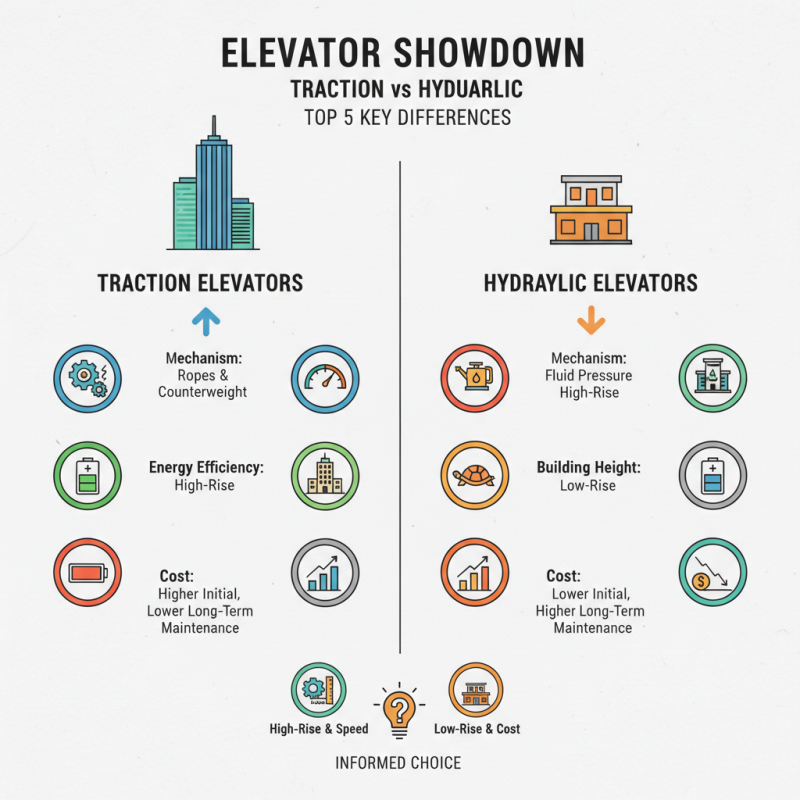
Traction Elevators: Mechanism and Functional Overview
Traction elevators operate on a pulley system, offering a unique approach to vertical transportation. Their mechanism comprises a steel cable loop that runs over a sheave. An electric motor drives the sheave, enabling precise control over the elevator's movement. This design results in a smoother ride compared to hydraulic elevators. The weight of the elevator car counterbalances the load, making operation more efficient. You might notice this in high-rise buildings where speed and efficiency are crucial.
One advantage of traction elevators is their adaptability. They can be installed in existing structures with minimal disruption. The system can achieve higher speeds, making it suitable for tall buildings. However, they require more space for the machine room compared to hydraulic systems. Maintenance can be complicated due to the intricate mechanism. This complexity sometimes leads to higher operational costs. While they provide several benefits, it’s essential to weigh these factors against specific project requirements.
Hydraulic Elevators: Mechanism and Operational Insights
Hydraulic elevators operate based on a simple yet effective mechanism. They use a pump to push fluid into a cylinder, which in turn raises the cabin. This design allows for powerful lifting capacity, making them suitable for low to mid-rise buildings. The operation is quiet and smooth, offering a comfortable ride.
However, the need for a machine room and tank can limit installation flexibility. Users must consider space constraints before choosing this type.
In terms of maintenance, hydraulic elevators can require more attention than others. The hydraulic fluid needs regular checking for leaks or contamination. This can lead to higher long-term maintenance costs.
However, these elevators usually have a longer lifespan if maintained properly. It's essential to balance the benefits against potential downsides, such as slower speed and less eco-friendliness.
The operational insights into hydraulic systems reveal both reliability issues and the need for regular upkeep to ensure optimal performance.
Key Differences in Energy Efficiency between Traction and Hydraulic Elevators
When comparing traction and hydraulic elevators, energy efficiency is a significant consideration. Traction elevators are powered by electric motors. These systems utilize counterweights that greatly reduce energy consumption. According to a report from the Elevator Industry Association, traction elevators can achieve energy savings of up to 30% compared to hydraulic systems. This efficiency is particularly beneficial in high-rise buildings.
On the other hand, hydraulic elevators rely on a pump to lift the cab. This design typically consumes more energy, especially in taller installations. The U.S. Department of Energy states that hydraulic elevators can lead to higher operating costs over time. They often remain operational for longer periods while consuming substantial energy. That said, they can be more suitable for small to mid-rise buildings where energy demand is less critical.
The choice between these systems impacts operational costs and energy use. Both types have their unique advantages, but traction elevators generally excel in energy efficiency. This focus on efficiency is essential as it aligns with global trends towards sustainability and reduced carbon footprints. However, it is crucial for decision-makers to assess the specific needs of their buildings before selecting an elevator type.
Cost Analysis: Installation and Maintenance of Elevators
When considering installation and maintenance costs, traction and hydraulic elevators present distinct differences. Traction elevators, known for their energy efficiency, may have a higher initial installation cost. They require a machine room, which can add to expenses. However, their long-term maintenance and operational costs are often lower. This is due to their advanced technology and lower energy consumption, leading to potential savings over time.
Hydraulic elevators, on the other hand, can be cheaper to install. They don't require a machine room, and their installation process can be quicker. However, the maintenance costs can rise significantly. Hydraulic systems use a lot of oil, which may need to be replaced regularly. Additionally, their components can wear out faster, leading to frequent repairs. This can offset the initial savings you might enjoy during installation.
Both systems have their advantages and disadvantages. The choice ultimately depends on the building's design, budget constraints, and intended use. Evaluating installation and ongoing maintenance costs is essential. By weighing these aspects, you can make a more informed decision about which elevator type best suits your needs.
Speed and Travel Height: Comparing Traction and Hydraulic Elevators
When comparing traction and hydraulic elevators, speed and travel height are critical factors. Traction elevators, which operate using pulleys and cables, can reach speeds up to 2,000 feet per minute. According to the Elevator World report, these elevators are ideal for high-rise buildings, reaching heights over 500 feet. Their ability to travel vast distances efficiently makes them preferred in modern skyscrapers.
In contrast, hydraulic elevators use a piston system, making them slower, with a maximum speed of around 200 feet per minute. They are suitable for low to mid-rise buildings, typically serving up to 5 to 7 floors. The same report indicates that hydraulic systems are limited to about 60 feet in travel height. This limitation is a drawback for developers focusing on taller structures.
Challenges exist with both systems. Traction elevators require more installation space and complex infrastructure. Hydraulic elevators, while simpler, may incur higher maintenance costs over time due to the hydraulic fluid system. Evaluating these factors is crucial for builders and architects, especially in urban planning.
Traction vs Hydraulic Elevators: Speed and Travel Height Comparison
FAQS
: Traction elevators use a pulley system with a steel cable loop. An electric motor drives the sheave for movement.
They offer a smoother ride and can achieve higher speeds, making them suitable for tall buildings.
They require more space for the machine room and have complex maintenance needs, which can increase costs.
Traction elevators can save up to 30% more energy than hydraulic systems. This is crucial for large installations.
Not necessarily. Hydraulic elevators may be more suitable for small buildings, though they consume more energy over time.
Focusing on energy efficiency reduces operational costs and supports sustainability efforts. It's essential for modern buildings.
Yes, they can be adapted with minimal disruption to existing buildings, but require more planning and space.
Yes, their complexity can lead to higher maintenance and operational costs, requiring reflection on project needs.
Building height, energy demands, operational costs, and maintenance requirements are key factors to evaluate.
No, each building has unique needs. It's vital to assess these before making a decision on elevator systems.
Conclusion
This article provides a comprehensive overview of the differences between traction and hydraulic elevators, addressing the fundamental question: "What is the difference between traction and hydraulic elevators?" It begins with a detailed mechanism and functional overview of traction elevators, highlighting their reliance on cables and pulleys, which allows for greater speed and efficiency over taller buildings. In contrast, hydraulic elevators are elaborated upon, showcasing their use of hydraulic fluids for movement, making them more suitable for low-rise applications.
The article further explores key differences in energy efficiency, with traction systems generally being more economical for high-rise applications due to reduced energy consumption. A cost analysis of installation and maintenance reveals that while traction elevators might have higher initial costs, they can prove more cost-effective in the long run. Additionally, the comparison of speed and travel height indicates that traction elevators outperform their hydraulic counterparts in delivering faster and higher transportation solutions.

 DHI Lift