Elevator cables rarely fail without warning. Corrosion, broken wires, uneven wear, poor lubrication, and overload can leave visible clues. Yet one question still worries building owners, passengers, and maintenance teams: “What happens if an elevator cable breaks?”
Modern traction elevators use several steel hoist ropes, not one cable. They also depend on traction sheaves, machine brakes, an overspeed governor, and car safety gear. If rope tension changes or the car accelerates abnormally, the governor can trigger safety devices. The car may stop against guide rails instead of dropping freely. It may feel violent, but controlled stopping is the intended protection. The counterweight matters too. The system is balanced, not suspended by a single strand.
The U.S. National Elevator Industry, Inc. explains that elevator safety depends on coordinated equipment, inspections, and qualified maintenance. ASME A17.1/CSA B44 sets widely recognized safety requirements for design, installation, and maintenance. ISO 8100-1 provides comparable international guidance for passenger and goods lifts. OSHA inspection guidance also emphasizes machine rooms, hoistways, doors, and safety components rather than cables alone. These standards are valuable, but they do not replace hands-on judgment.
Look closely at the details. A metallic snap may signal broken wires. Rope dust can collect beneath the sheave. Uneven grooves may expose alignment problems. Do not enter the shaft or touch damaged equipment. Report unusual noise, vibration, slipping, or leveling immediately.
A cable break is possible, but a total free fall is uncommon in compliant, maintained systems. Still, “unlikely” is not “impossible.” That distinction deserves more honest attention. Safety begins before the emergency, with documented inspections, competent technicians, and timely rope replacement.
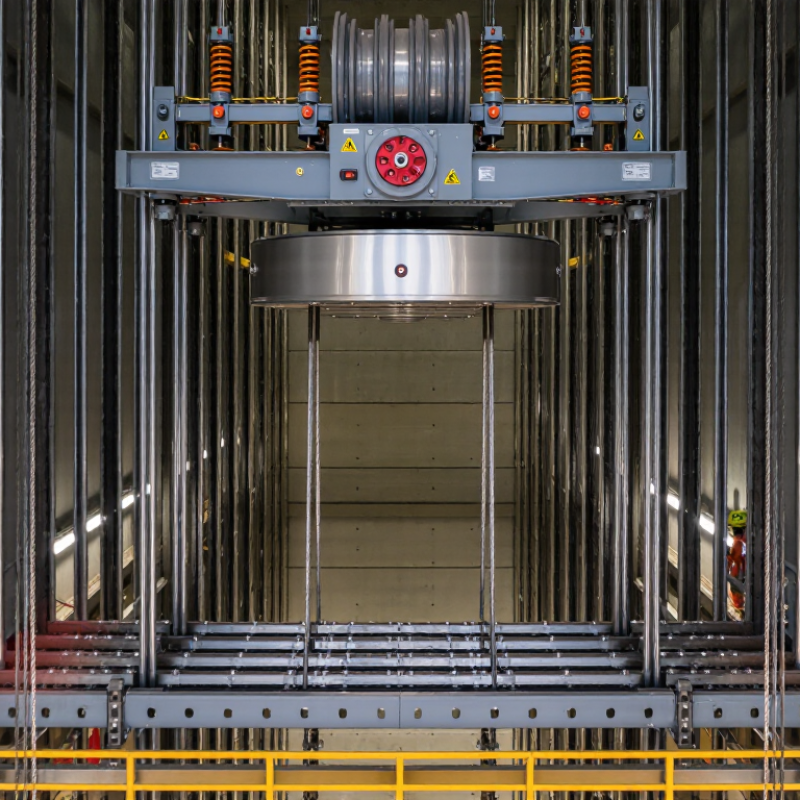
Elevator cables do more than hold a car in the air. In most traction elevators, several steel suspension ropes pass over a grooved sheave. The sheave turns through an electric motor, moving the car and counterweight in opposite directions. This arrangement reduces energy use and keeps movement controlled.
The word “cable” can mislead us. It is usually a group of ropes, not one simple line. If one rope becomes damaged, the remaining ropes may continue supporting the load, while sensors can stop the elevator. A broken rope does not always mean a free fall. If the car moves too quickly, an overspeed governor can activate safety gear that grips the guide rails. The machine brake also helps hold the system still.
Safety depends on more than rope strength. Inspectors check broken wires, corrosion, diameter loss, lubrication, alignment, and unusual vibration. A shiny rope can still contain internal fatigue. That detail is easy to miss. Regular maintenance should follow the equipment design and local safety requirements. Qualified technicians use measured evidence, not guesswork.
A practical warning sign is a new scraping sound or uneven floor leveling. Passengers should leave the car when it stops safely and request professional assistance. Never force the doors or climb out. Elevator safety is layered, but no layer deserves blind trust.
When an elevator cable breaks, the car usually does not drop like a stone. Modern elevator systems often use several load-bearing ropes, so one damaged rope may not cause immediate movement. Sensors monitor rope tension, speed, and car position. If the car begins moving too quickly, a mechanical governor can activate the safety gear.
The safety gear grips the guide rails beside the elevator car. You may hear a sharp metallic sound, feel strong shaking, or notice the car stop between floors. The counterweight can also move, depending on the failure. Hydraulic systems behave differently, but their valves and safety devices can limit uncontrolled descent. Buffers at the shaft bottom provide another layer of protection, not the main stopping method.
This is not a guarantee of a gentle stop. It is easy to describe elevator protection as automatic and perfect, but that explanation is incomplete. Equipment condition, inspection quality, loading, and failure type all matter. Inside the car, passengers should avoid forcing the doors or climbing out. Stay away from the threshold, use the alarm or emergency communication system, and wait for trained responders. A qualified technician must inspect the ropes, governor, guide rails, brakes, and landing doors before service resumes. Even a small frayed section deserves attention. Safety depends on details.
2026 Best Elevator Cable Safety: What Happens If It Breaks?
A broken elevator cable does not automatically create a free fall. Modern elevator systems often use several suspension ropes, balanced loads, and controlled traction. If one rope fails, the remaining ropes may still support the car, depending on the elevator design and maintenance condition. The drive brake also holds the sheave when power stops.
Protection works in layers. An overspeed governor detects unsafe downward movement through a mechanical linkage. It can activate safety gear that grips the guide rails and stops the car. Buffers in the pit provide another layer if the car travels too far downward. Door interlocks also prevent doors from opening unless the car reaches a safe landing position. These systems require correct adjustment. They are not magic, and neglected equipment can respond poorly.
Tips: Building managers should schedule inspections with qualified elevator technicians and keep clear service records. Ask whether the ropes show corrosion, broken wires, uneven wear, or poor tension. Listen for scraping, sudden vibration, or unusual stopping. Report these signs promptly. Never test a safety device yourself. In real maintenance work, documentation is sometimes treated as paperwork, but it can reveal repeated faults before they become dangerous. Safety standards also vary by location, so local requirements and the elevator’s service manual should guide every inspection.
| Safety layer | What it does | What happens after a rope problem | Important facts | Typical verification or reference |
|---|---|---|---|---|
| Multiple suspension ropes | Share the car and counterweight load and provide redundancy. | If one rope is damaged or breaks, the remaining ropes can continue supporting the load while protective devices stop the elevator or remove it from service. | The exact number and construction of ropes depend on the elevator design, rated load, speed, and local code. | Rope condition, diameter, tension, corrosion, broken wires, and termination security are checked during maintenance and inspection. |
| Rope fastenings and end connections | Transfer rope forces to the car or counterweight through approved sockets, shackles, or other engineered terminations. | A loose, stretched, or damaged termination can be detected through inspection before it becomes a complete loss of support. | Correct alignment, fastening, lubrication where specified, and equalized rope tension are essential. | Visual inspection, measured rope tension, fastening checks, and maintenance records. |
| Traction sheave and rope groove system | Maintains traction between the suspension ropes and the driving sheave. | Excessive groove wear, poor tension, or contamination can cause slipping; monitoring and maintenance help prevent loss of traction. | Traction loss is different from a rope breaking and may cause unintended movement or leveling problems if not corrected. | Sheave wear, groove profile, rope alignment, traction condition, and brake performance are inspected. |
| Overspeed governor | Detects excessive downward or upward car speed and initiates the safety circuit. | If the car accelerates beyond the governor’s calibrated trip condition, the governor can cause the car safeties to engage and can remove power from the hoisting system. | The trip setting is code- and design-dependent; there is no single universal speed value for every elevator. | Functional testing and reset procedures are specified by the applicable elevator safety code and inspection authority. |
| Car safety gear | Grips or wedges against the car guide rails to stop or limit unintended downward movement. | After a qualifying overspeed event, the governor-operated linkage activates the safety gear, bringing the car to a controlled stop on the guide rails. | Safety gear is not intended to be used as a routine stopping device and normally requires inspection after activation. | Periodic safety tests verify engagement, stopping performance, clearances, and proper reset. |
| Machine brake and unintended-movement protection | Stops the driving machine and helps prevent movement when the elevator should be stationary. | A brake fault or unintended movement condition can trigger monitoring circuits and remove the elevator from service before normal operation continues. | The brake is not the only protection against a free fall; it works together with the governor and car safety system. | Brake holding, wear, adjustment, electrical monitoring, and stopping distance are checked during service. |
| Counterweight guidance and protection | Guides the counterweight and limits hazardous movement within the hoistway. | Depending on the design and applicable code, the counterweight may have its own safety provisions or other means of limiting excessive movement. | Counterweight protection requirements vary with elevator type, rated speed, travel, and jurisdiction. | Guide shoes, frame condition, clearances, ropes, and any required counterweight safety equipment are inspected. |
| Emergency terminal stopping devices | Limit car travel and speed near the top and bottom terminal landings. | If normal stopping or control functions fail, terminal switches and related devices can remove power or initiate an emergency stop before the car reaches the end of the hoistway. | These devices provide additional protection but do not replace the governor and car safety gear. | Limit switches, terminal stopping performance, controller functions, and clearances are tested. |
| Buffers in the pit | Provide a final energy-absorbing stopping surface if the car or counterweight travels beyond the normal terminal zone. | The buffer can reduce impact energy at the end of travel, but it is a last-line device and does not prevent the initial descent caused by a rope failure. | Buffer type and required performance depend on the elevator speed, mass, travel, and applicable code. | Condition, mounting, oil level where applicable, corrosion, clearances, and required tests are inspected. |
| Door interlocks and landing-door monitoring | Prevent the elevator from running with a landing door or car door improperly secured. | The elevator should not receive a normal run command unless the required door-lock conditions are satisfied. | Door interlocks do not stop a free-falling car; they protect passengers from entering an open hoistway and support safe operation. | Interlock engagement, electrical contacts, door-zone operation, and bypass protection are tested. |
| Inspection and preventive maintenance | Finds rope wear, corrosion, broken wires, sheave damage, brake problems, and safety-device defects before failure. | Abnormal conditions should lead to corrective work and removal of the elevator from service when safe operation cannot be confirmed. | Inspection intervals and test requirements vary by jurisdiction, elevator type, usage, and applicable code. | Common reference frameworks include ASME A17.1/CSA B44, EN 81-20, EN 81-50, and local regulations. |
2026 Best Elevator Cable Safety: What Happens If It Breaks?
A damaged elevator cable does not automatically cause a free fall. Most systems use several ropes, traction grooves, and a machine brake. If tension changes, sensors can detect slack, unusual motion, or repeated stopping faults. The controller then removes drive power and commands the brake to hold the sheave. A cable may look acceptable from the floor, yet hidden corrosion can remain inside. That is why visual checks alone are imperfect.
The overspeed governor provides another layer of protection. If the car moves downward too quickly, the governor trips mechanical safety gear. The gear grips the guide rails and slows the car independently of normal drive power. ASME A17.1/CSA B44 and ISO 8100-1/2 require protective functions, testing, and inspection procedures for these systems. The U.S. Consumer Product Safety Commission has estimated about 30 elevator-related deaths and 17,000 injuries annually. These figures cover many hazards, not cable breaks specifically. That limitation matters when interpreting safety claims.
Tips: Keep inspection records specific. Note broken wires, rust dust, rope diameter, and unusual vibration. Never bypass a sensor or governor during service. Ask a qualified technician to test brake response and governor operation under approved procedures. Industry reports often emphasize maintenance, but maintenance quality can vary. A missed defect is still possible. Regular independent review remains sensible, especially in older installations.
Elevator cable safety depends on inspection, maintenance, and several independent protective systems. Modern elevators usually use multiple hoist ropes, not one cable. If a rope breaks, the car may remain supported by the others. A governor and safety gear can activate if excessive speed is detected. A complete cable failure is rare, but no system should be treated as perfect.
Qualified technicians should inspect ropes for broken wires, corrosion, flattening, kinks, and uneven tension. They also examine sheaves, brakes, guide rails, and emergency communication equipment. Maintenance records should show clear dates, findings, repairs, and follow-up checks. Dust near the shaft, unusual vibration, or a sharp metallic sound deserves immediate attention. Inspections can miss developing damage, so repeated monitoring matters.
Tips: If the elevator stops, stay inside and press the alarm or emergency-call button. Give your location calmly. Do not force the doors or climb out between floors. Keep away from the doorway and wait for trained responders. If the car moves suddenly, hold a handrail and protect your head. A phone may lose signal. Save battery power. Never rely on online advice instead of the building’s emergency procedure. Even experienced passengers may panic, and that can make a safe rescue harder.
Inspection, Maintenance, and Passenger Actions During Cable Emergencies
This engineering example assumes a six-rope traction elevator with equal load sharing. As suspension ropes are removed from service, the theoretical load carried by each remaining rope increases. The values are calculated percentages, not elevator code limits or a prediction of free fall. Elevators use multiple suspension members, speed monitoring, brakes, and safety devices; passengers should press the alarm button, remain inside the car, avoid forcing the doors, and wait for trained responders. Qualified professionals must inspect and maintain ropes according to the applicable local elevator code and manufacturer requirements.
Usually, no. Many elevators use several load-bearing ropes, so one damaged rope may not cause immediate movement.
Sensors detect unusual speed or position. A mechanical governor can trigger safety gear and grip the guide rails.
You may hear metal striking metal, feel strong shaking, or stop between floors. It may not feel gentle.
The controller can remove drive power and command the machine brake to hold the sheave. Protection is layered.
No. Hydraulic systems use valves and other safety devices. Their response differs from rope-driven elevators.
No. Buffers provide another protection layer. They are not the primary method for stopping uncontrolled movement.
Stay away from the doors and threshold. Use the alarm or emergency communication system, then wait for trained responders.
Hidden corrosion can exist inside the rope. Look for broken wires, rust dust, unusual vibration, or a changed rope diameter.
They should inspect ropes, brakes, governors, guide rails, and landing doors. One missed defect can still matter.
No. Equipment condition, inspection quality, loading, and failure type affect the outcome. That simple explanation is incomplete.
Elevator cables are essential lifting components, carrying the car and balancing its load during every journey. What happens if an elevator cable breaks? A properly designed elevator does not simply fall freely. Multiple cables, protective braking equipment, speed governors, sensors, and guide systems work together to detect unusual movement, limit speed, and bring the car to a controlled stop. These safeguards are designed with separate layers of protection so that a single cable failure does not automatically cause a dangerous descent.
Reliable operation also depends on regular inspections, preventive maintenance, and timely replacement of worn parts. Technicians check cables for corrosion, broken wires, stretching, and other signs of damage, while testing brakes, sensors, and governors to confirm that they respond correctly. If passengers experience unusual shaking, sounds, or a sudden stop, they should remain calm, use the emergency communication system, avoid forcing the doors open, and wait for trained assistance. Consistent maintenance and correct passenger actions are key to elevator safety during a cable-related emergency.

DHI Lift